
Current Affairs
FlyDubai Flight FZ1073 Emergency Landing: Multiple Misidentified Videos Spread Online
FlyDubai Flight FZ1073 made an emergency landing on September 30, 2026, but multiple false videos spread online. Learn what actually happened and which claims are unverif

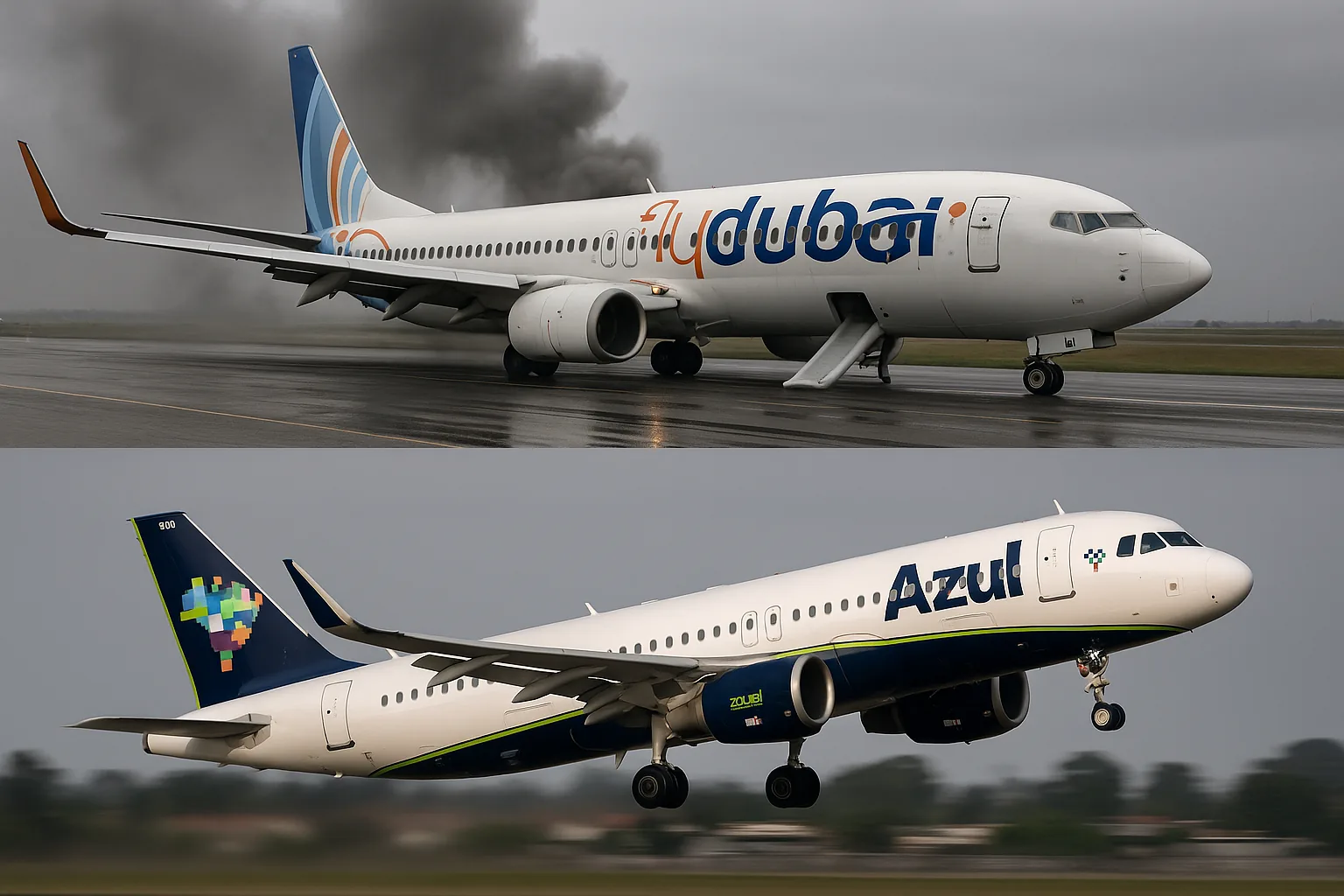
When FlyDubai Flight FZ1073 made an emergency landing in Tabuk, Saudi Arabia, on September 30, 2026, the incident was dramatic enough on its own terms: a violent cockpit altercation, scrambled Israeli fighter jets, and a planeload of mostly Israeli passengers stranded far from their destination. Within hours, however, the verified facts of the story were competing with a wave of online content that misrepresented what had actually happened. Understanding the spread of flydubai emergency landing misinformation requires separating what primary sources have confirmed from what remains unverified — a distinction that much of the early social media coverage failed to make.
What Actually Happened Aboard Flight FZ1073
The flight departed Dubai bound for Tel Aviv on the morning of September 30, 2026. According to reporting by CNN, an apparent violent altercation occurred inside the cockpit during the flight, involving one pilot stabbing another. The attacked pilot was identified as Captain Smit Machchhar. The remaining crew managed to divert the aircraft and bring it down safely at Tabuk in northwestern Saudi Arabia — an outcome that aviation analysts subsequently described as requiring exceptional skill and composure under extreme duress.
The emergency triggered an immediate international response. Israel scrambled fighter jets in connection with the incident, reflecting the sensitivity of a flight operating on the Dubai–Tel Aviv route during an already tense geopolitical period. The mostly Israeli passenger complement remained in Saudi Arabia while officials from multiple governments worked to arrange their return. Meanwhile, the pilot suspected of carrying out the attack was transferred to the United Arab Emirates as a formal investigation began to unfold across jurisdictions.
FlyDubai moved quickly at the institutional level. The airline announced the suspension of its Israel flights pending the outcome of the probe into what it described as an attempted hijacking. That announcement, reported by the Times of Israel on September 30, 2026, confirmed the airline’s own characterization of the cockpit incident as more than a routine altercation — it was being treated as an attempted seizure of the aircraft. PBS NewsHour and CNBC both reported on the extraordinary skill required from the surviving crew to land the plane safely, underscoring the severity of what passengers and crew had experienced.
The Verified Misinformation: One Video, Falsely Labeled
As news of the incident spread rapidly across social media platforms on September 30 and into October 1, 2026, at least one piece of video content circulated with claims that it showed footage directly connected to Flight FZ1073. The UK-based fact-checking organization Full Fact investigated the video and found that it did not show anything from the FZ1073 incident at all. According to Full Fact’s published findings, the footage actually depicted a different FlyDubai aircraft flying over Dubai — unrelated to the emergency landing in Tabuk.
The deception was compounded by the audio track attached to the video. Full Fact established that the audio did not originate from the FZ1073 flight either: it came from a separate 2022 turbulence incident that occurred over South America. The combination of unrelated visual footage and unrelated audio, packaged together and labeled as documentation of the September 30 emergency, made the video a textbook example of how misinformation about aviation incidents is assembled. It exploited the FlyDubai brand identity — the plane in the footage is a genuine FlyDubai aircraft — to lend surface plausibility to a false claim.
This is the single misidentified video that primary sources have confirmed as part of the flydubai emergency landing misinformation landscape. Full Fact’s investigation provides a named, traceable source with a specific finding: the footage was misleading, the audio was from 2022, and neither element related to FZ1073. That level of specificity matters, because it allows readers and researchers to retrace the verification independently rather than simply accepting the debunking on trust.
→ Read also: Video of FlyDubai Flight FZ1073 Emergency Landing Misidentified as Post-Hijacking Celebration
Claims That Circulated Beyond What Sources Can Confirm
The article title and several early social media summaries of the incident referenced multiple misidentified videos — including one allegedly showing a Brazilian Azul Airlines aircraft and another purportedly showing an Israeli basketball team celebrating, footage that reportedly dated from 2025 and was misrepresented as passengers celebrating after surviving a hijacking attempt. These specific claims appear in summaries and aggregated reporting about the misinformation wave surrounding FZ1073.
However, the verified source base available at the time of writing does not independently confirm either of those two additional videos as part of the documented misinformation campaign. No primary source in the verified brief — not Full Fact, not CNN, not PBS NewsHour, not the Times of Israel — provides a named finding that a Brazilian Azul Airlines video or an Israeli basketball team video was falsely labeled as FZ1073 content. Responsible reporting requires acknowledging that gap plainly: those claims may be accurate, but they have not been established by the sources available here, and stating them as confirmed fact would itself constitute a form of misinformation.
This distinction is not pedantic. In the context of a high-stakes aviation incident with geopolitical dimensions — a flight between the UAE and Israel, involving a cockpit attack, Israeli military jets, and passengers stranded in Saudi Arabia — the accuracy of every factual claim carries real weight. Overstating the documented scope of a misinformation campaign can inadvertently amplify unverified narratives, creating a secondary layer of confusion on top of the primary one.
Why Aviation Incidents Are Particularly Vulnerable to Misidentified Footage
The pattern seen around Flight FZ1073 is not unique to this incident. Aviation emergencies generate intense public interest within minutes of breaking, and that demand for visual documentation almost always outpaces the supply of verified footage. Cockpit incidents, by their nature, produce no bystander video from outside the aircraft. Emergency landings at remote airports — Tabuk is not a major international hub — mean that professional camera crews are unlikely to be present. The visual record is thin, and that thinness creates a vacuum that unrelated footage rushes to fill.
The 2022 South American turbulence audio used in the debunked FlyDubai video illustrates a specific technique: audio laundering, where genuine distress sounds from one incident are grafted onto unrelated visuals to create an emotionally compelling but factually false composite. Screaming passengers, warning tones, and pilot communications are highly evocative; audiences processing them in real time are unlikely to pause and verify whether the audio matches the visuals. The result is content that feels authentic precisely because its component parts are real — they simply do not belong together.
The FlyDubai brand element in the debunked video adds another layer of sophistication. Showing an actual FlyDubai aircraft — even one filmed over Dubai on an ordinary day — means the content passes a quick visual check. A viewer who knows that Flight FZ1073 was a FlyDubai aircraft sees a FlyDubai aircraft in the video and registers a match. The mismatch is in the context, the date, the location, and the audio, none of which are immediately visible in the footage itself.
The Geopolitical Amplification Factor
The Dubai–Tel Aviv route carries symbolic weight that extends well beyond routine commercial aviation. The route exists because of the Abraham Accords, the normalization agreements between the UAE and Israel, and flights on it are freighted with political significance in a region where diplomatic relationships remain contested. An incident involving a FlyDubai flight headed to Tel Aviv — one involving an apparent attempt to seize the aircraft — was always going to generate intense interest from audiences across the Middle East, Israel, and the broader international community.
→ Read also: Flydubai September 2026 Incident Spawns Wave of Fabricated Videos and Deepfakes
That intensity creates fertile ground for flydubai emergency landing misinformation to spread rapidly. Social media algorithms reward engagement, and few topics generate engagement as quickly as aviation emergencies combined with geopolitical tension. Content that appears to offer visual documentation of the incident — even content that is factually wrong — travels faster than careful corrections. The Full Fact debunking, published after the misleading video had already circulated widely, faced the structural disadvantage that all corrections face: the false version had a head start.
Israel’s decision to scramble fighter jets in response to the incident added a military dimension that further accelerated sharing. For audiences already primed by regional tensions, a story involving a diverted commercial flight, a cockpit attack, and Israeli air force jets activated multiple existing narratives simultaneously. In that environment, the threshold for sharing unverified footage drops significantly: the story already seems extraordinary, so extraordinary footage seems plausible.
What the Passenger and Crew Situation Revealed
Beyond the misinformation dimension, the verified facts of the FZ1073 aftermath raise serious questions about the logistical and diplomatic frameworks that govern extraordinary aviation incidents. The mostly Israeli passengers who found themselves in Tabuk — a Saudi city — after an emergency landing were in a situation without clear precedent in the post-Abraham Accords era. Saudi Arabia and Israel do not have formal diplomatic relations, and the presence of Israeli nationals on Saudi soil following an aviation emergency required improvised coordination between governments that do not maintain standard bilateral channels.
CNN’s October 1, 2026, reporting confirmed that officials were arranging the passengers’ return, but the precise mechanisms and timeline remained fluid. The suspect pilot’s transfer to the UAE for investigation reflected a similar complexity: FlyDubai is a UAE-based carrier, the incident occurred in Saudi airspace, and the flight was bound for Israel. Determining which jurisdiction holds investigative primacy in such a scenario involves overlapping legal frameworks that have not been stress-tested by an incident of this kind before.
Captain Smit Machchhar, the attacked pilot, became a focal point of public attention as details of his role in managing or surviving the cockpit crisis emerged. The CNBC coverage specifically highlighted the skill and split-second decision-making required to bring the aircraft down safely under the circumstances — a reminder that behind the geopolitical and misinformation dimensions of the story, the immediate human reality was a crew managing a life-threatening situation with no margin for error.
How to Evaluate Footage Circulating About This Incident
For anyone encountering video or images claiming to document the FZ1073 emergency landing, several specific questions are worth applying before sharing. First: does the footage show Tabuk airport, or does it show a generic airport or city environment? Tabuk has identifiable visual characteristics, and footage from Dubai, Tel Aviv, or elsewhere is immediately inconsistent with the verified landing location. Second: has the footage been reviewed by a named fact-checking organization with a traceable finding? Full Fact’s investigation of the debunked video is an example of what that looks like — a specific claim, a specific finding, a specific source for the audio. Third: does the audio in the video match what would be expected from the specific stage of the incident being claimed? Audio from a 2022 South American turbulence event would not match the circumstances of a cockpit altercation over the Arabian Peninsula in 2026.
None of these checks require specialist knowledge. They require only the habit of pausing before sharing and asking whether the content has been verified by a named source. In the hours immediately following a breaking aviation incident — when demand for footage is highest and supply of verified material is lowest — that pause is the single most effective individual intervention against the spread of flydubai emergency landing misinformation and incidents like it.
The story of Flight FZ1073 is significant enough without embellishment: a commercial aircraft diverted under violent circumstances, a pilot attacked in the cockpit, fighter jets scrambled, passengers stranded across a diplomatic boundary, and an airline suspending an entire route while investigators work across multiple jurisdictions. That verified record is the story. The misidentified footage that circulated alongside it is a separate story — one about how information ecosystems respond to high-stakes breaking news — and conflating the two does a disservice to both.
This article was produced with AI assistance and reviewed editorially.

Political Ads in 2026 Midterms Contain False or Misleading Claims About Opponents

Trump Administration ‘Super Intelligence’ Accord Misspells ‘United States’ as ‘Unites States’

Trump Administration ‘Super Intelligence’ Accord Misspells ‘United States’ as ‘Unites States’

No Going Back PAC Ad Makes Misleading Claim About Roy Cooper and Rape Kits
