
Current Affairs
Campaign Ads Use Out-of-Context Votes to Attack Opponents
Political campaigns are using decontextualized votes, selective editing, and AI-generated fabrication to mislead voters about candidates’ positions in the 2026 election c

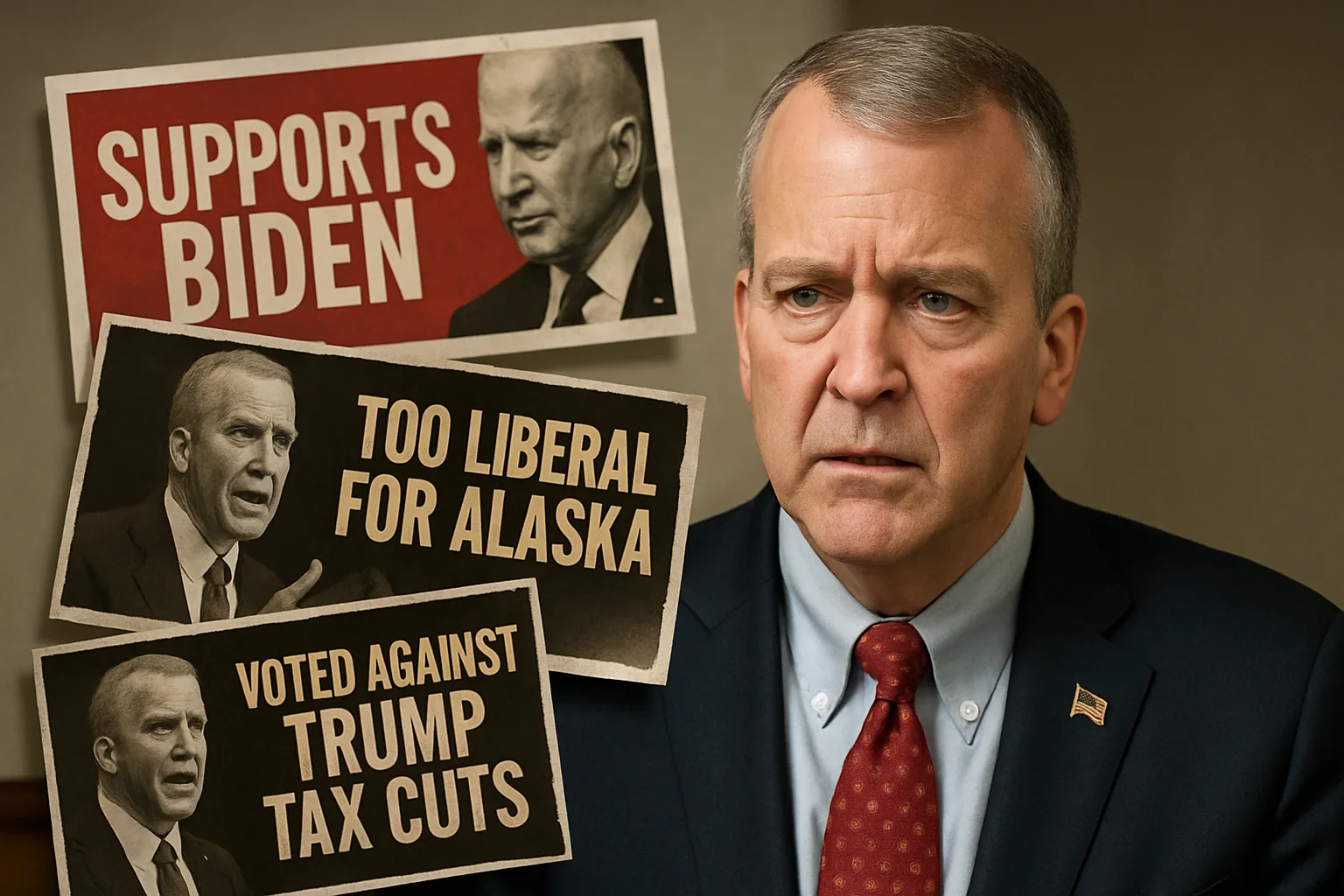
As ballots for the November election arrive and attack ads hit screens and mailboxes across the country, one of the most persistent problems in American democracy is once again on full display: misleading political campaign ads that strip voting records of context, splice statements out of sequence, or fabricate claims wholesale using artificial intelligence. The 2026 election cycle has produced a fresh wave of examples, and the tactics — decontextualization, selective editing, and AI-generated fabrication — are sophisticated enough to fool even attentive voters.
How Decontextualization Turns a Real Vote Into a False Story
The most common and, in many ways, most insidious form of misleading political campaign ads involves real votes, real quotes, and real footage — assembled in ways that reverse their meaning. A legislator who votes against a bill for procedural reasons, or because a poison-pill amendment was attached, can be portrayed as opposing the bill’s stated purpose entirely. A comment made in a nuanced policy discussion can be clipped to a single sentence that sounds alarming without its surrounding argument.
This technique is effective precisely because it is technically true. The vote happened. The words were spoken. Fact-checkers must do significantly more work to demonstrate the deception, because the deception lives in what was left out rather than what was invented. Voters who encounter a rebuttal often find it less memorable than the original accusation — a well-documented asymmetry in political communication research.
The mechanics usually follow a recognizable pattern. A campaign identifies a vote or statement that, stripped of its legislative or conversational context, sounds damaging. The ad presents that fragment with dramatic music, a unflattering still image of the opponent, and a narrator’s grave tone. No lie is technically told. But the impression created is false, and that false impression is the entire point of the exercise.
AI-Generated Ads Introduce a New Layer of Deception
Beyond the traditional manipulation of real footage, the 2026 cycle has been marked by a significant escalation: the use of artificial intelligence to generate campaign content that never happened at all. This is a qualitative shift from decontextualization. Rather than misrepresenting something real, AI-generated ads can fabricate reality from scratch, presenting invented scenarios with a surface plausibility that was previously impossible to achieve cheaply.
Several documented examples illustrate the range of this problem. Bruce Blakeman, the New York Republican candidate for governor, used an AI-generated ad to target incumbent Kathy Hochul — a case that drew attention both for its content and for the questions it raised about disclosure. Separately, an AI-generated ad featured Spencer Pratt during his losing campaign against incumbent Los Angeles Mayor Karen Bass, demonstrating that the tactic is not confined to major statewide races.
→ Read also: Republican and Democratic Campaign Ads Make False or Misleading Claims in 2026 Election Cycle
The satirical end of the spectrum is also active. An AI-generated video depicted James Talarico singing a rewrite of the song My Favorite Things — from the musical The Sound of Music — with lyrics rewritten to mock progressive and transgender policies. The satirical framing complicates the legal and ethical picture: satire has a long and protected history in political speech, but AI-generated satire that mimics a real person’s voice or likeness can cross into territory that voters may not immediately recognize as fictional.
Even authentic footage can be weaponized in new ways. A video of Republican Representative Thomas Massie having dinner with two Democratic colleagues circulated widely during Kentucky’s heated GOP primary — the implication being guilt by association. The footage was real, but the narrative imposed on it was constructed to suggest something the video itself did not establish.
Why Misleading Political Campaign Ads Are So Difficult to Counter
Understanding why this problem persists requires understanding the structural conditions that allow it to thrive. First, political advertising in the United States enjoys broad First Amendment protections that do not apply to commercial advertising. A company that falsely claims its product cures a disease faces regulatory consequences. A campaign that falsely claims its opponent voted to defund the police faces, at most, a fact-check and a news cycle of criticism — neither of which carries legal weight.
Second, the economics of political advertising favor speed over accuracy. Campaigns operate on compressed timelines, and an ad that lands in the week before an election may never be formally rebutted before votes are cast. The rebuttal, even when it comes, rarely reaches every voter who saw the original claim. Digital targeting means that misleading ads can be served to specific demographic segments without ever appearing in front of journalists or fact-checkers who might scrutinize them.
Third, voters are not a monolithic audience. Some will seek out additional context; many will not. Research consistently shows that emotional, negative content is processed differently from corrective information — it tends to be encoded more deeply and recalled more readily. Campaigns know this, and the design of misleading ads exploits it.
The Fact-Checking Response and Its Limits
Organizations dedicated to monitoring political advertising have expanded their work in response to the 2026 cycle’s volume and sophistication. PolitiFact maintains a dedicated Ad Watch category that examines both political campaign ads and issue advocacy ads, rating their accuracy and providing sourced analysis. Publications such as Campaigns & Elections have documented the growing ecosystem of fact-checking outfits that monitor claims in political advertising.
→ Read also: Republican Campaign Ads Contain Misleading Claims on Rape Kits and Rural Hospitals in 2026 Election
These efforts are valuable, but they operate under constraints. Fact-checkers can only review ads they can find, and micro-targeted digital ads may never surface in public channels. The volume of ads produced in a competitive election cycle — across federal, state, and local races — vastly exceeds the capacity of any single organization to review. And even the most thorough fact-check reaches a fraction of the audience that saw the original ad.
The PolitiFact Ad Watch section represents one model for sustained, systematic scrutiny of political advertising, applying consistent standards across parties and candidates. But the fundamental challenge is structural: fact-checking is reactive, while the production and distribution of misleading content is proactive and well-funded.
What Voters Can Do to Protect Themselves
In the absence of comprehensive regulatory solutions, individual media literacy remains the most accessible tool available to voters. Several habits can meaningfully reduce the risk of being misled.
- Seek the full voting record. Official legislative databases publish complete voting records with the bill text, amendments, and procedural context. A vote that looks alarming in an ad often looks mundane when the full record is examined.
- Check the original quote. When an ad attributes a statement to a candidate, find the original source — the speech, interview, or debate — and read or watch the surrounding context. Clipping is one of the oldest tricks in political advertising.
- Notice what the ad does not say. Misleading ads rely on omission. Ask what information would change your interpretation of what you just saw, and then look for that information.
- Look for disclosure language. AI-generated content in political ads is increasingly subject to disclosure requirements in some states, though enforcement is uneven. The presence or absence of disclosure language is itself informative.
- Consult multiple fact-checking sources before forming a firm opinion on a contested claim. No single outlet has a monopoly on accuracy, and cross-referencing reduces the risk of inheriting one organization’s blind spots.
The Regulatory Landscape and Where It Falls Short
The question of how to regulate misleading political campaign ads without infringing on political speech is genuinely difficult, and legislators have not resolved it. Several states have moved to require disclosure when AI-generated content appears in political advertising, and some have gone further by prohibiting certain categories of AI-generated deepfakes in electoral contexts. Federal legislation has been proposed but has not yet produced comprehensive rules.
The challenge is definitional. Decontextualization — the most common form of misleading political advertising — is nearly impossible to regulate without giving government bodies the authority to adjudicate what counts as sufficient context, which creates obvious risks of politically motivated enforcement. AI-generated fabrication is somewhat easier to address through disclosure mandates, but enforcement depends on platforms and campaigns acting in good faith, which cannot be assumed.
Bloomberg’s analysis of AI campaign ads in the 2026 cycle has argued that current safeguards are insufficient given the speed at which AI tools are improving and the ease with which they can now be deployed by campaigns at any budget level. The gap between what technology can produce and what regulation can address is widening, and the 2026 cycle is demonstrating the consequences in real time.
The underlying dynamic — that misleading political campaign ads are cheap to produce, expensive to rebut, and structurally advantaged by the speed of modern media — is not new. What is new is the scale, the sophistication of AI-generated fabrication, and the precision of digital targeting. Voters, journalists, and fact-checkers are not powerless in response, but the tools available to them need to keep pace with the tools available to those who profit from deception. That gap, more than any single ad or any single race, is the defining challenge of political communication in this election cycle.
This article was produced with AI assistance and reviewed editorially.

Political Ads in 2026 Midterms Contain False or Misleading Claims About Opponents

Trump Administration ‘Super Intelligence’ Accord Misspells ‘United States’ as ‘Unites States’

Trump Administration ‘Super Intelligence’ Accord Misspells ‘United States’ as ‘Unites States’

No Going Back PAC Ad Makes Misleading Claim About Roy Cooper and Rape Kits
