
Current Affairs
Trump Posts Animal Attack Videos, Including AI-Generated Content, on Truth Social
President Trump posted a montage of animal attacks to Truth Social on October 13, 2026, but three of five clips were AI-generated, raising concerns about synthetic media.

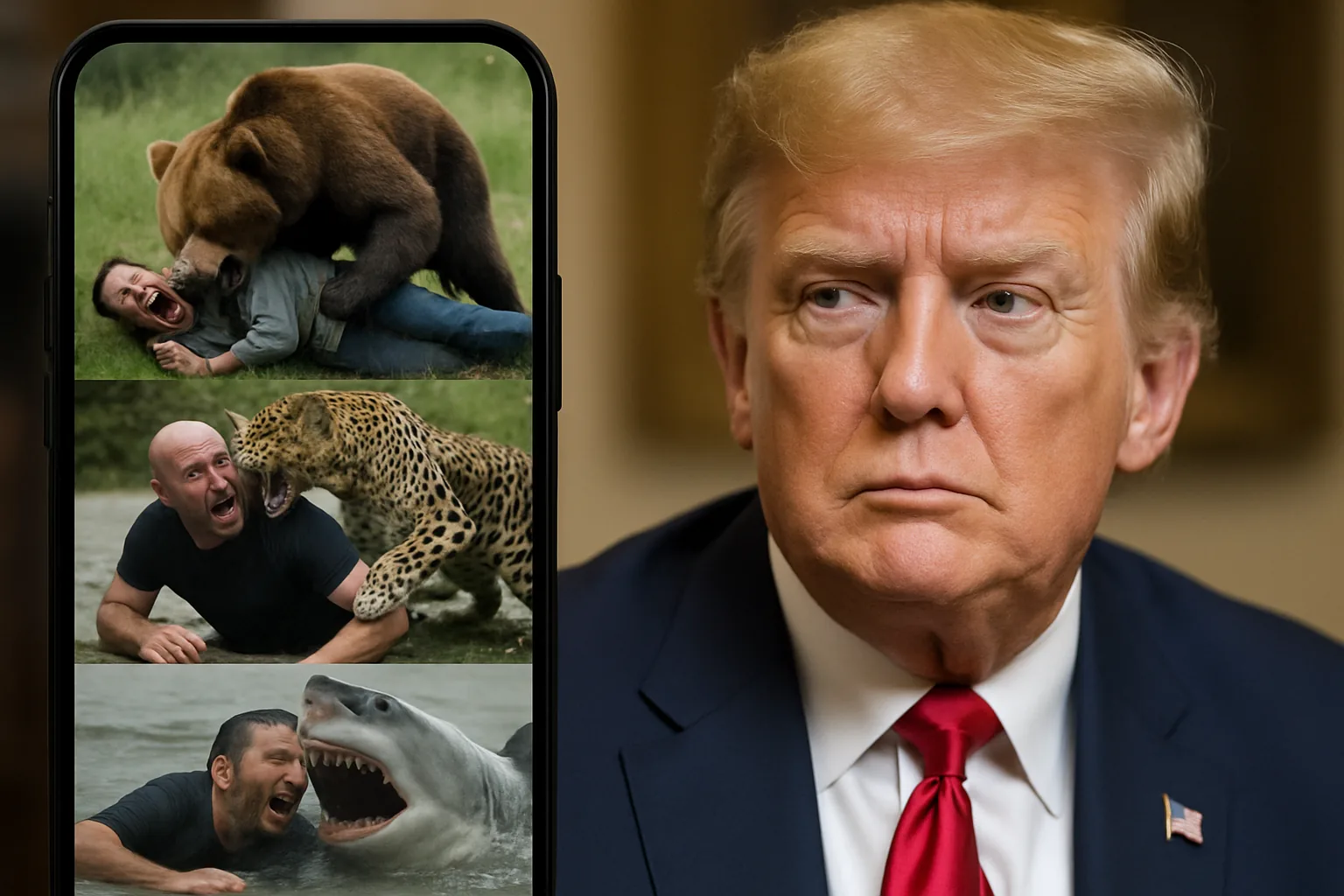
On the evening of October 13, 2026, President Donald Trump posted a montage of animal attack footage to his Truth Social account, captioning it “Don’t ever mess with nature! President DJT.” The five-clip video compilation quickly drew scrutiny from media outlets and digital forensics tools alike — because not all of the footage was real. Three of the five clips were found to carry strong indicators of AI generation, while two others were confirmed as authentic video, including one depicting a fatal incident that had occurred just days earlier in England. The post raises substantive questions about the spread of synthetic media from high-profile accounts, and about the human cost when real tragedy is packaged alongside fabricated content.
What Trump’s Truth Social Post Actually Contained
The montage Trump shared on the night of October 13–14, 2026 was composed of five video clips depicting animal attacks, primarily involving large predatory cats. According to reporting by International Business Times UK and corroborated by multiple outlets, three of the five clips in the montage were AI-generated rather than authentic recordings of real events. The remaining two clips were genuine footage: one showing a lion attack from 2018, and one depicting a fatal tiger incident that had taken place at Yorkshire Wildlife Park in northern England on October 10, 2026 — just three days before Trump shared the compilation.
The AI-generated clips were flagged using Hive Moderation, an automated content detection tool. Hive Moderation rated the first three video clips in the montage with scores indicating a high probability of AI generation. The tool does not identify the specific generative model used, but its scoring methodology is designed to detect statistical signatures characteristic of synthetic video. These results were reported by Yahoo News as part of broader fact-checking coverage of the post.
Understanding this breakdown matters precisely because the montage did not present itself as a mix of real and synthetic material. There were no labels, no disclosures, and no editorial framing distinguishing fabricated clips from genuine ones. A viewer encountering the post would have had no obvious way of knowing which footage showed real events and which did not.
The Fatal Yorkshire Wildlife Park Incident
The most sensitive element of the Truth Social post was the inclusion of footage connected to the death of William Chapman, a 23-year-old man who was killed in a tiger attack at Yorkshire Wildlife Park in northern England on October 10, 2026. The tiger involved was an Amur tiger, a species also known as the Siberian tiger. The incident occurred just days before Trump shared the montage, meaning the footage depicted an extremely recent, real fatality involving an identifiable victim.
→ Read also: AI-Generated and Manipulated Images Circulate as Authentic Election and Political Content
Chapman’s family responded to the circulation of the footage with a direct public statement. According to CBC News, the family called the sharing of the attack footage “deeply offensive” and urged people to stop sharing it. Their statement did not single out any individual by name but was made in the context of widespread online distribution that included Trump’s post.
The inclusion of this clip alongside AI-generated content creates a specific editorial problem: synthetic footage of fictional animal attacks was placed in the same reel as video connected to a real person’s death, with no distinction made between the two. The family’s grief is not abstract — William Chapman was 23 years old, and his death occurred within the same week the footage was amplified by the account of a sitting United States president.
A Separate AI Video: Trump and the Tiger
Shortly before midnight on the same evening, Trump also posted a second, distinct piece of content: an AI-generated video depicting him wrestling or playing with a tiger. This clip was separate from the five-clip montage and was clearly a depiction of Trump himself rendered through generative AI tools. The video featured the song “The Lion Sleeps Tonight” playing in the background.
This second post is relevant context because it demonstrates that Trump was actively engaging with AI-generated animal content that evening — not passively sharing material without awareness of its nature. Whether the presence of this self-referential AI clip alongside the montage reflects any specific editorial awareness of the synthetic content within the montage itself is not established by the available evidence, and no such claim should be made. What the record shows is that both posts appeared on the same evening, from the same account.
How AI-Generated Video Spreads Through High-Profile Accounts
The broader pattern illustrated by Trump’s Truth Social post — where AI-generated animal attack videos are shared alongside authentic footage without differentiation — reflects a growing challenge in the media environment of late 2026. Generative video tools have advanced to a point where short clips of dramatic events, including animal attacks, can be produced with sufficient visual plausibility to pass casual inspection. Detection tools like Hive Moderation exist precisely because human visual review alone is no longer a reliable filter.
→ Read also: AI-Generated and Manipulated Videos Spread as Authentic Footage
When posts containing a mix of real and synthetic footage are shared by accounts with millions of followers, the synthetic clips inherit the implicit credibility of the authentic ones. A viewer who recognises the Yorkshire Wildlife Park footage as real may extend that assumption of authenticity to the surrounding clips. This is not a theoretical concern — it is the mechanism by which fabricated content gains traction, and it is documented in the specific composition of this montage.
According to Newsweek‘s coverage of the post, the compilation attracted significant attention and was widely recirculated before questions about its composition were raised publicly. By the time detection tool results were reported, the post had already reached a large audience.
What the Evidence Confirms and What It Does Not
Several specific facts about this episode are well-supported by multiple independent sources. Trump posted the montage on October 13, 2026. The montage contained five clips, of which three were AI-generated according to Hive Moderation scoring. Two clips were authentic: one from a 2018 lion attack, and one connected to the October 10, 2026 fatal tiger attack at Yorkshire Wildlife Park involving William Chapman, age 23. Trump captioned the post “Don’t ever mess with nature! President DJT.” He also posted a separate AI-generated video of himself with a tiger, set to “The Lion Sleeps Tonight,” on the same evening. Chapman’s family publicly called the sharing of the footage deeply offensive.
What the evidence does not establish: the exact timestamp of the original post, the precise visual content of each of the three AI-generated clips, and whether the footage connected to the Yorkshire incident showed the moment of Chapman’s death or stopped before that point. These details remain unverified across available sources and should not be stated as fact.
The episode does not fit a simple true/false binary. The montage was real — Trump genuinely posted it. The caption was real. Two of the clips were real. But three clips embedded within that same post were synthetic, presented without disclosure, and placed alongside footage tied to a real person’s recent death. The family of William Chapman has asked that the footage stop circulating. That request stands regardless of the platform, the account, or the surrounding content — real or AI-generated — in which it appears.
This article was produced with AI assistance and reviewed editorially.

Political Ads in 2026 Midterms Contain False or Misleading Claims About Opponents

Trump Administration ‘Super Intelligence’ Accord Misspells ‘United States’ as ‘Unites States’

Trump Administration ‘Super Intelligence’ Accord Misspells ‘United States’ as ‘Unites States’

No Going Back PAC Ad Makes Misleading Claim About Roy Cooper and Rape Kits
