
Current Affairs
Trump Posts AI-Generated Tiger Video and Footage of Fatal UK Zoo Attack on Truth Social
President Trump shared AI-generated and authentic tiger attack videos on Truth Social in October 2026, mixing synthetic footage with real footage from a fatal UK zoo inci

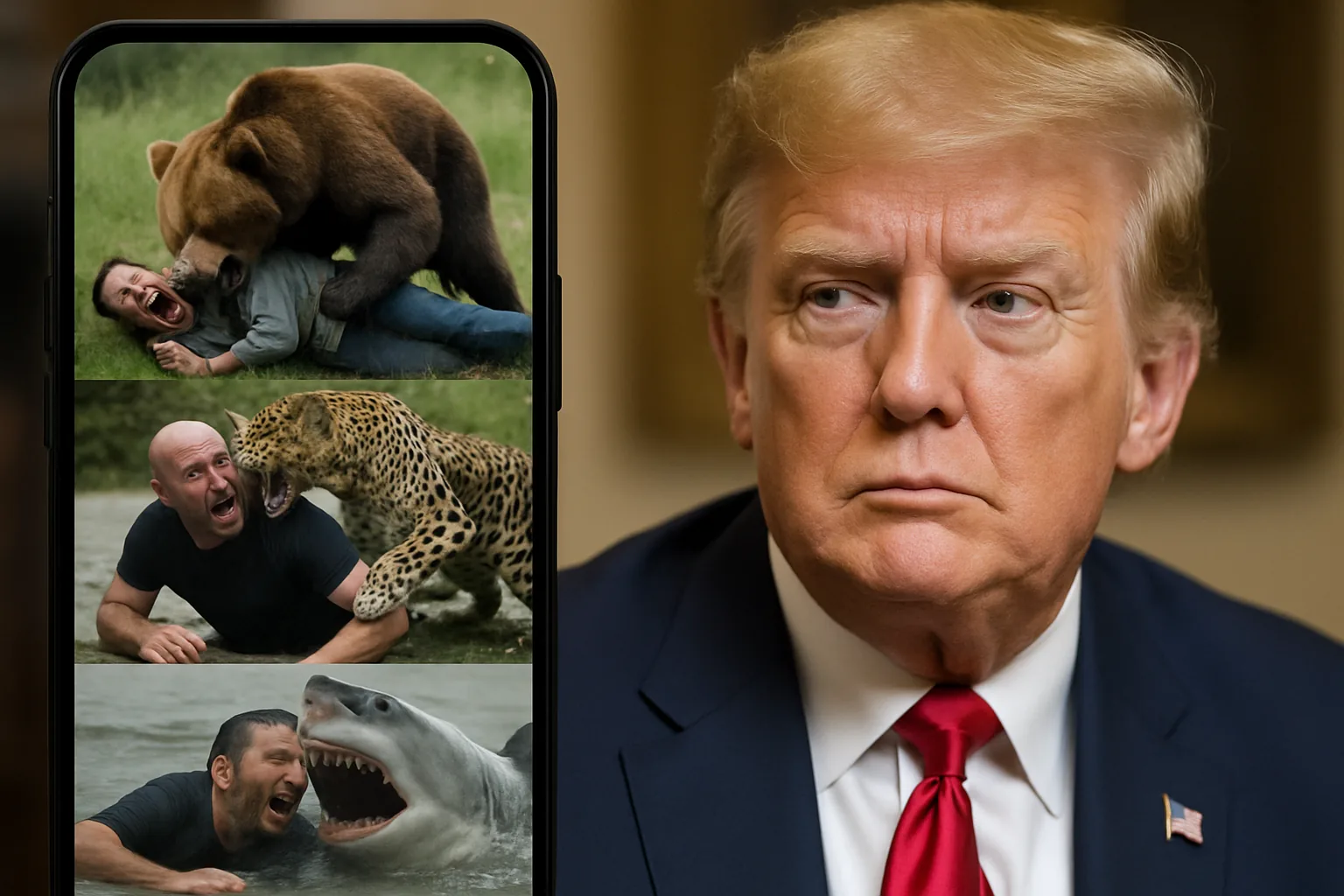
On October 13–14, 2026, President Donald Trump used his Truth Social platform to share a series of videos featuring large-cat attacks on humans — a posting spree that quickly drew widespread attention because it mixed an AI-generated clip depicting Trump himself wrestling a tiger with authentic footage of a real, fatal mauling that had occurred just days earlier in northern England. The juxtaposition raised immediate and serious questions about context, sensitivity, and the responsibilities that come with a sitting president’s social media reach, particularly when a grieving family was still asking the public to stop circulating images of their loved one’s death.
What Trump Actually Posted on Truth Social
According to reporting by USA Today, Newsweek, and France 24, Trump made at least two distinct posts on Truth Social on October 13, 2026, both centred on big-cat attacks. The first was a 41-second video showing an actual tiger attacking a person at Yorkshire Wildlife Park in northern England — authentic, graphic footage of a real incident that had taken place over the preceding weekend. The caption Trump attached to that post read, according to USA Today: “Don’t ever mess with nature! President DJT.”
The second post — which introduced the Trump AI-generated tiger video that would dominate subsequent coverage — was a 23-second clip set to the song The Lion Sleeps Tonight. In it, a digitally fabricated version of Trump appears to tame or wrestle a tiger. The clip bears the hallmarks of generative AI video tools that have proliferated through 2025 and 2026: fluid but slightly unnatural movement, lighting inconsistencies, and the kind of seamless compositing that would have required a full film-production crew just a few years ago. Newsweek confirmed that Trump posted videos showing big cats mauling people on Tuesday, October 13, 2026. USA Today specifically verified the 23-second length and the musical accompaniment of the AI-generated clip.
What the verified sources do not establish is a precise, itemised breakdown of every clip Trump shared — some reports referenced additional footage of big-cat attacks, but the specific composition of any multi-clip montage could not be confirmed from the primary sources available at the time of writing. This article reflects only what those sources directly establish.
The Fatal Attack That Provided the Real Footage
The authentic video Trump shared was not archival or anonymous footage from the internet. It documented the death of William Chapman, a 23-year-old former child star, who entered a tiger enclosure at Yorkshire Wildlife Park in northern England sometime over the weekend of October 10–12, 2026. The tiger involved was an Amur tiger named Altai, weighing 420 pounds. Chapman died as a result of the attack.
→ Read also: AI-Generated and Manipulated Images Circulate as Authentic Election and Political Content
Amur tigers — also known as Siberian tigers — are among the largest big cats on Earth. A 420-pound specimen represents a fully mature male, an animal capable of delivering fatal injuries within seconds. Yorkshire Wildlife Park, located in South Yorkshire, is a well-regarded wildlife facility; the circumstances that allowed Chapman to enter the enclosure remain a matter of ongoing inquiry by UK authorities.
France 24 reported that Chapman had a history of mental illness, a detail that adds a layer of complexity to the circumstances of his death and underscores why his family found the viral spread of the footage so distressing. Chapman’s family publicly urged people to stop sharing the footage of the attack, according to France 24. That appeal was made even as the video was being amplified by one of the most-followed accounts on Truth Social — the sitting President of the United States.
The New Republic identified Chapman as a former child star who was in his mid-20s at the time of his death, consistent with the age of 23 confirmed by USA Today. The convergence of those details — a young man with a public past, a documented mental health history, a violent and filmed death — makes the casual reposting of the footage by a head of state a matter that goes well beyond ordinary social media controversy.
The Trump AI-Generated Tiger Video: What Is Confirmed
The Trump AI-generated tiger video is the element of this story that sits most squarely in the domain of synthetic media. The clip, verified as 23 seconds long by USA Today, presents a version of Trump physically dominating a large tiger — an image that would be physically impossible to produce authentically and that was clearly not filmed in any real-world setting. The use of The Lion Sleeps Tonight as its soundtrack gives the clip a playful, triumphalist tone.
AI-generated video of public figures has become an increasingly prominent feature of the political information environment in 2025 and 2026. Tools capable of producing photorealistic short-form video are now widely accessible, and the line between satire, propaganda, and disinformation has become correspondingly harder to draw. When such content is shared without clear labelling by a political figure with tens of millions of followers, the potential for audience confusion about what is real is non-trivial — even when the content itself seems obviously fantastical.
The verified sources do not establish whether Trump’s Truth Social posts included any disclosure that the AI clip was synthetically generated. That specific question — whether a label was present or absent — cannot be answered from the available sourcing and is therefore not asserted here.
→ Read also: AI-Generated and Manipulated Videos Spread as Authentic Footage
Why the Combination of Posts Matters
Taken individually, either post might have generated limited commentary. An AI-generated video of a president performing a cartoonish feat of strength is the kind of content that circulates regularly in contemporary political culture. Authentic footage of a fatal animal attack, while graphic, has appeared in news contexts before. What made this episode distinctive was the pairing: on the same day, the same account shared both a synthetic, self-aggrandising tiger video and real footage of a man dying in a tiger attack — footage that the victim’s own family was simultaneously begging the internet to stop spreading.
That pairing is what drew the coverage from outlets including USA Today, Newsweek, France 24, and the New Republic. The implicit contrast — Trump as unbeatable tiger-tamer in AI fantasy, set against the reality of a young man killed by a 420-pound Amur tiger — was not lost on commentators, though the verified record does not establish that Trump intended any such juxtaposition. Attributing intent to a social media post is an assessment, not a fact, and the sourcing does not support that inference.
What the sourcing does establish is the timeline: the post captioned with the reference to not messing with nature came first, on October 13, followed by the AI clip. Newsweek confirmed the October 13 date for the big-cat videos; USA Today places the AI clip within the October 13–14 window. Chapman’s death at Yorkshire Wildlife Park occurred over the October 10–12 weekend — meaning the fatal attack was, at most, three days old when Trump shared footage of it with his Truth Social audience.
The Broader Context of AI Media and Political Accounts
The episode sits within a pattern that researchers and platform-policy advocates have tracked with growing urgency through 2025 and 2026: the use of AI-generated video by political figures, shared on platforms with large audiences, without consistent disclosure or labelling. Truth Social, the platform Trump founded, does not have the same AI-content labelling infrastructure that some larger platforms have introduced, though the specifics of its current policies as they apply to this post are not confirmed in the available sourcing.
For context on the scale of the Amur tiger involved: the World Wildlife Fund’s Amur tiger species page documents that adult males typically weigh between 400 and 675 pounds and can reach lengths of more than ten feet. A 420-pound animal is therefore at the lower end of that range but still represents an apex predator against which a human being has effectively no survival margin in an unprotected enclosure.
The death of William Chapman at Yorkshire Wildlife Park is a matter of public record and active inquiry in the United Kingdom. His family’s request — that people refrain from sharing the footage of his final moments — represents a straightforward human appeal that was overtaken by the velocity of social media sharing, accelerated in this case by presidential amplification. The Trump AI-generated tiger video and the authentic footage it was posted alongside will both remain part of the documented record of how synthetic and real media coexist, and sometimes collide, in the current political moment. The facts, as established by the available primary sources, are stark enough without embellishment: a 23-year-old man died, his family asked for privacy, and the footage of his death was shared by the President of the United States on the same day he posted an AI clip of himself taming the same species of animal that killed that young man.
This article was produced with AI assistance and reviewed editorially.

Political Ads in 2026 Midterms Contain False or Misleading Claims About Opponents

Trump Administration ‘Super Intelligence’ Accord Misspells ‘United States’ as ‘Unites States’

Trump Administration ‘Super Intelligence’ Accord Misspells ‘United States’ as ‘Unites States’

No Going Back PAC Ad Makes Misleading Claim About Roy Cooper and Rape Kits
