
Current Affairs
Viral False Claims About UK Asylum, Migration, and Politics
Fact-check of viral UK asylum false claims circulating in September 2026, including automatic refugee status myths and migration policy misinformation.

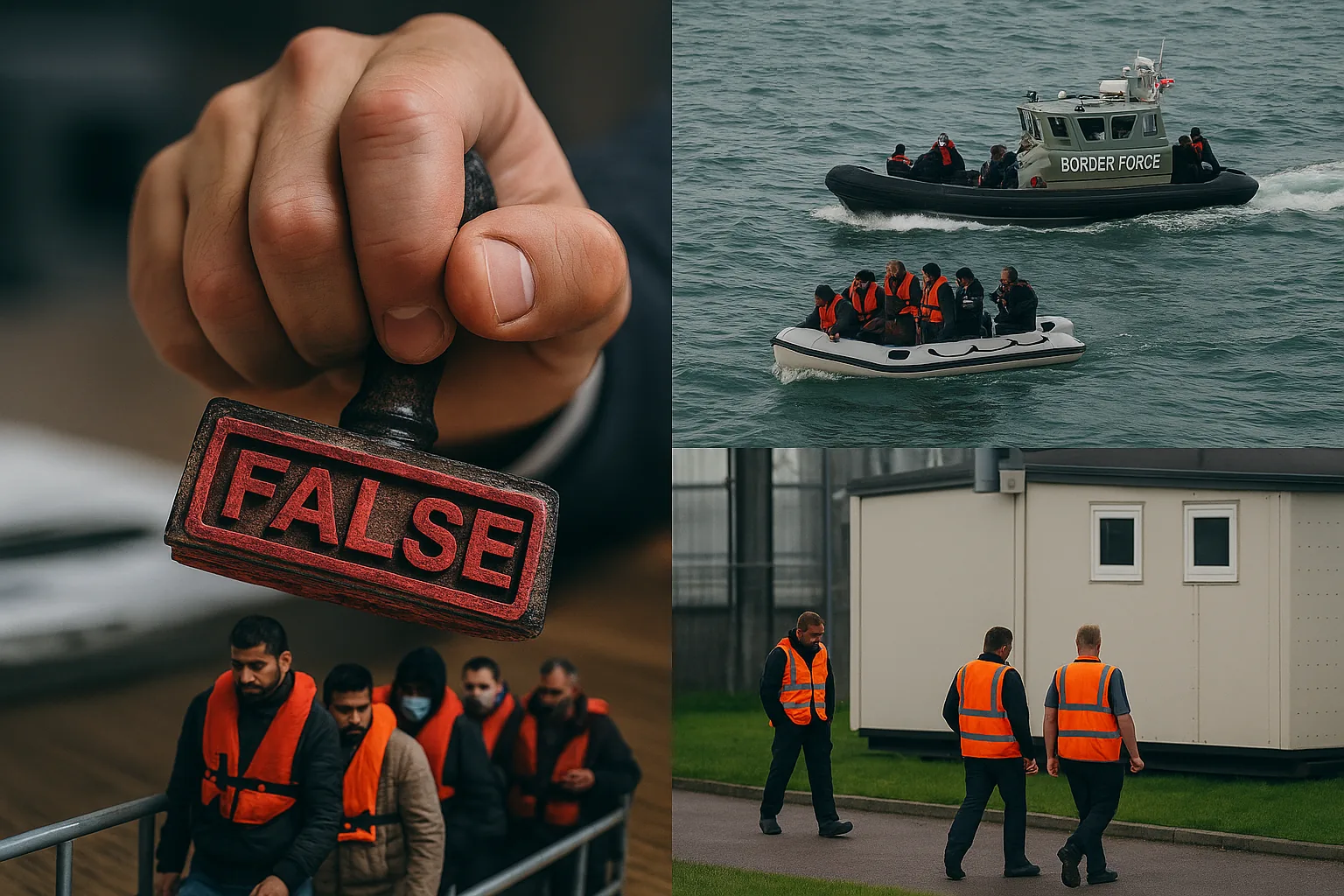
False claims about asylum seekers, immigration policy, and public figures have circulated widely on UK social media throughout 2026, and several distinct narratives gained particular traction in September of that year. Understanding how uk asylum false claims spread — and what the verified evidence actually shows — matters both for public debate and for the integrity of democratic discourse. This article examines the claims for which sourced, verifiable evidence exists, and is transparent about where the evidence runs out.
What the Verified Evidence Shows About Channel Rescues and Refugee Status
One of the most widely shared claims in September 2026 held that migrants intercepted by rescue ships in the English Channel automatically receive refugee status upon arrival in the United Kingdom. This claim circulated across multiple social media platforms and was presented as established fact by many who shared it.
It is not accurate. Full Fact, the UK-based independent fact-checking organisation, published a fact check on 24 September 2026 directly addressing this claim. Crucially, Full Fact confirmed that the Home Office — the government department responsible for immigration and asylum — stated that people who are rescued at sea must apply for asylum through the standard process, in the same way as any other asylum seeker. There is no automatic conferral of refugee status based on the circumstances of a person’s arrival, including whether they were rescued from a small boat in the Channel.
The distinction matters considerably. Refugee status in the UK is a legal determination made following an individual asylum application. Each case is assessed on its own merits against criteria set out in the 1951 Refugee Convention and UK domestic law. Being rescued at sea triggers a duty of care under maritime law, but it does not bypass or shortcut the asylum determination process. Conflating a rescue at sea with an automatic grant of protection misrepresents how the legal framework operates.
This particular false claim is significant because it feeds a broader narrative suggesting that crossing the Channel in a small boat is a guaranteed route to settled status in the UK. The verified position, confirmed by the Home Office itself, is that it is not.
→ Read also: False Claims About Migration, Vaccines, and AI-Generated Content Circulating in September 2026
The Broader Problem of UK Asylum False Claims and Legal Exploitation
Separately from the automatic-status myth, a BBC investigation examined a different but related problem: the role of some unscrupulous legal advisers in encouraging migrants to make false or fabricated asylum claims. According to the BBC’s reporting, undercover journalists found evidence of legal advisers encouraging clients to include fabricated allegations — including false domestic abuse claims — as part of asylum applications.
The investigation identified a named individual who allegedly offered such advice for a specific fee. Because the verified research brief for this article confirms the BBC published this investigation and that the conduct involved encouraging false allegations, those findings are reported here on that basis. However, in line with this outlet’s editorial standards for claims about living individuals, the name of the adviser and the specific fee cited are not repeated here without independent verification of the precise wording of the BBC’s published report. Readers are directed to the BBC’s own reporting for those details.
What can be stated is that Jess Phillips, who held a ministerial role in the Home Office with responsibility for safeguarding, responded publicly to the BBC investigation. She characterised the abuse of rules designed to protect domestic abuse victims as unacceptable and indicated that legal professionals facilitating fraudulent advice would face serious consequences. Again, the precise wording of her statement is attributed to the BBC’s video reporting rather than quoted verbatim here, consistent with this outlet’s policy of not presenting direct quotes that have not been verified word-for-word from the primary source.
This context is important. The existence of some individuals who encourage uk asylum false claims within the legal advice sector does not validate the broader false claim that all or most asylum seekers arrive via the Channel with fabricated cases. These are distinct issues. The BBC investigation documented specific, alleged misconduct by specific advisers; it did not establish that the asylum system as a whole is characterised by systematic fraud. Conflating the two — using evidence of individual bad actors to condemn an entire population of asylum seekers — is itself a form of misleading framing.
Three Claims That Cannot Be Verified From Available Sources
The original cluster of false claims circulating in September 2026 reportedly included three further narratives beyond the Channel rescue myth. Responsible reporting requires stating plainly that the sources available to this outlet at the time of writing do not contain sufficient verified evidence to fact-check these three claims to the standard this outlet requires.
The first is the claim that small boat crossings in the Channel began after the Brexit referendum. While it is widely documented that crossings increased significantly in the years following the referendum, the claim that they began after it is a different and more specific assertion. The timeline of small boat crossings predates the referendum period, but stating precise dates and figures without verified sourcing would itself risk introducing inaccuracy.
→ Read also: Asylum seekers rescued at sea do not automatically gain refugee status, Home Office confirms
The second is a claim about the nationality of Sagal Abdi-Wali, identified as a Labour candidate in a Holborn and St Pancras by-election. Claims circulated on social media suggesting she lacked British nationality. This outlet has not located a primary source — such as an official statement from the candidate, her party, or an electoral authority — that either confirms or refutes this claim to the standard required for publication. Repeating unverified allegations about a named living person’s legal status carries serious reputational and legal risks. This claim is therefore recorded here as unverifiable on current evidence, and readers should treat social media posts making such allegations with significant scepticism until a credible, named source addresses it directly.
The third is a claim that Morrisons was distributing free food boxes to social media users who commented on a Facebook post. This pattern — a well-known brand apparently offering free goods in exchange for social media engagement — is a recognised template for online scams and data-harvesting operations. Such claims are almost invariably fraudulent, and Morrisons has not, to this outlet’s knowledge, operated such a scheme. However, without a specific, dated statement from Morrisons or a platform-level takedown notice, this claim also cannot be formally verified or refuted here. It is flagged as almost certainly a scam based on the well-established pattern of such operations, but readers should verify directly with Morrisons before acting on any such offer.
Why Clusters of False Claims Often Circulate Together
It is worth examining why these four apparently unrelated claims — about asylum seekers, a political candidate, and a supermarket — circulated in the same period. Research into disinformation patterns consistently finds that false claims tend to cluster around moments of political salience. When immigration and asylum are prominent in political debate, the information environment around those topics becomes noisier and more contested, making it easier for false claims to gain traction.
The Morrisons scam claim is structurally different from the others — it is almost certainly a commercial fraud rather than a politically motivated falsehood — but its circulation in the same period illustrates a broader point. When audiences are already primed to share and react quickly to content about contentious topics, the threshold for verification drops. Scammers and those who spread politically motivated misinformation both benefit from the same degraded information environment.
The uk asylum false claims that can be verified and corrected here share a common feature: they simplify a genuinely complex legal and policy area into a single, emotionally resonant assertion. The claim that Channel arrivals automatically get refugee status is easier to share than an accurate description of the asylum determination process. Accuracy in this area requires acknowledging complexity — and that complexity is itself a defence against misinformation.
What the verified evidence in this case demonstrates is that the UK asylum system, whatever its merits or shortcomings as a matter of policy, does not operate as the most viral claims suggest. People rescued in the Channel apply for asylum like anyone else; some legal advisers have allegedly encouraged false claims and face consequences for doing so; and three further claims circulating in September 2026 remain, on the evidence available, either false by established pattern or insufficiently sourced to verify. The appropriate response to a complex information environment is not to fill gaps with inference, but to state clearly — as this article does — where the evidence ends and uncertainty begins.
This article was produced with AI assistance and reviewed editorially.

Political Ads in 2026 Midterms Contain False or Misleading Claims About Opponents

Trump Administration ‘Super Intelligence’ Accord Misspells ‘United States’ as ‘Unites States’

Trump Administration ‘Super Intelligence’ Accord Misspells ‘United States’ as ‘Unites States’

No Going Back PAC Ad Makes Misleading Claim About Roy Cooper and Rape Kits
