
Current Affairs
Trump Claims Medicaid Drug Savings Through ‘GENEROUS’ Model, But Evidence Remains Unclear
Trump administration claims billions in Medicaid drug savings through the GENEROUS model, but independent experts say the actual evidence and contract details remain uncl

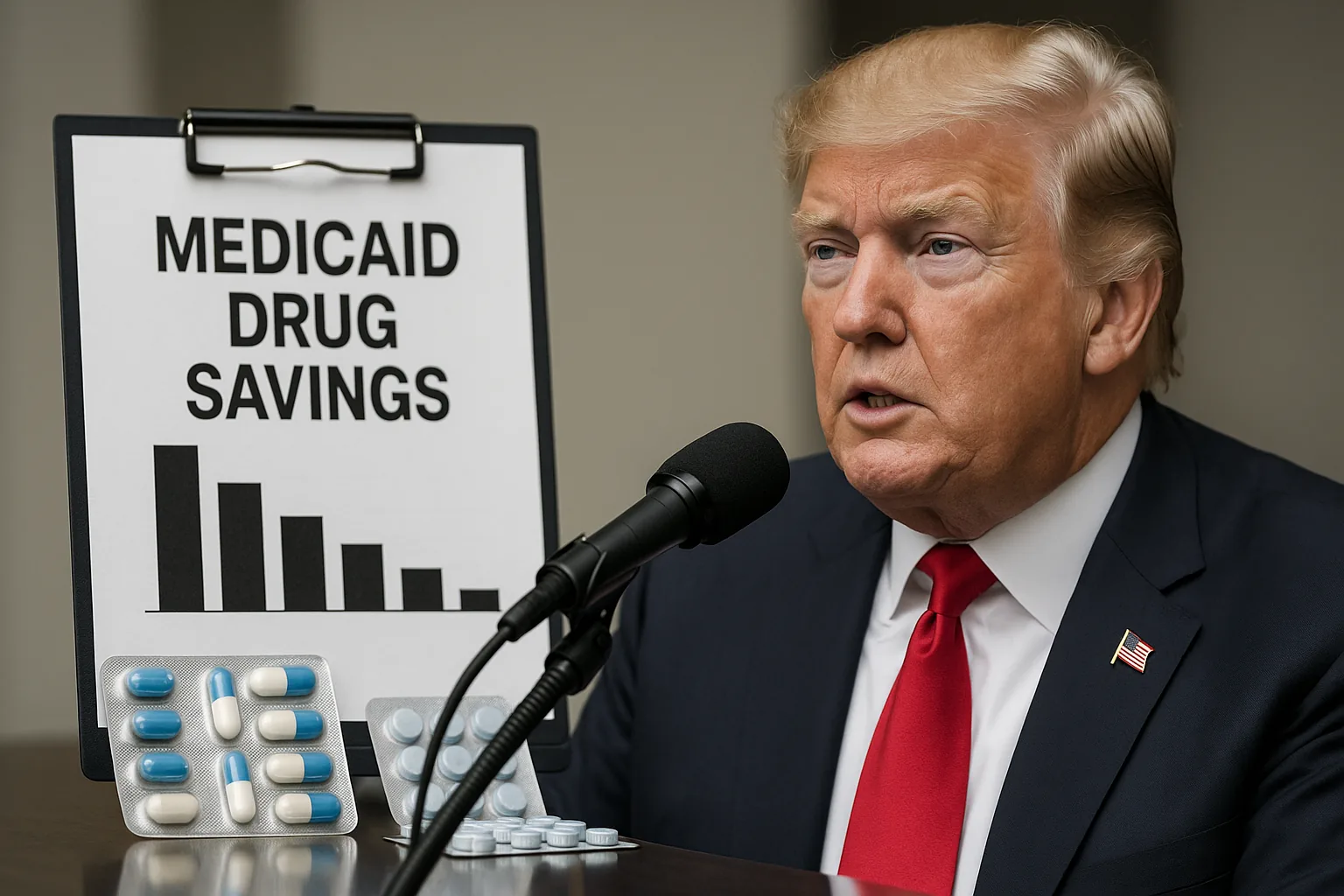
The Trump administration has made sweeping claims about Medicaid drug savings through a new federal pricing initiative, asserting that states across the country will collectively save billions of dollars on prescription drug costs. Yet independent experts and policy analysts warn that the actual scope of those savings — and the contractual details underpinning them — remain hidden from public view, making it impossible to verify whether the headline figures reflect genuine fiscal gains or aspirational projections. The gap between what the administration is saying and what the evidence actually supports is wide, and it matters enormously for the roughly 80 million Americans who depend on Medicaid for their healthcare coverage.
What the Administration Is Claiming About Medicaid Drug Savings
At the center of this debate is a federal initiative the Trump administration has branded the Medicaid ‘GENEROUS’ model — a name that itself signals the administration’s intent to frame the policy as a landmark win for taxpayers and program beneficiaries alike. According to reporting by the Associated Press, the Trump administration has claimed that Medicaid will save billions on prescription drug costs as a direct result of this plan. These are not modest projections; the administration has presented the program as a transformative restructuring of how the federal government negotiates and pays for medications within the Medicaid system.
Adding to the scale of the announcement, President Trump declared that all 50 states are joining the Medicaid drug pricing model, as reported by PBS NewsHour. That claim, if accurate, would represent one of the most comprehensive federal-state alignments on drug pricing in recent memory. Medicaid is jointly funded by the federal government and individual states, so a nationwide adoption of a single pricing framework would theoretically carry enormous leverage over pharmaceutical manufacturers. The administration has leaned heavily into this framing, presenting universal state participation as evidence that the model is both popular and effective.
The political appeal of such claims is straightforward. Drug pricing has been a persistent flashpoint in American healthcare policy for decades. Both parties have promised to lower prescription costs, and any administration that can credibly claim to have achieved billions in Medicaid drug savings stands to gain significant political capital. The ‘GENEROUS’ model, whatever its actual mechanics, has been presented in terms designed to resonate with voters who feel squeezed by pharmaceutical costs and skeptical of government inaction.
Why Experts Are Skeptical of the Savings Figures
Despite the boldness of the administration’s claims, independent analysts have raised significant concerns about the verifiability of the promised savings. The core problem, as experts cited by the Associated Press have noted, is that the content of the deals is not public. Without access to the actual contractual terms negotiated between the federal government and pharmaceutical companies — or between the federal government and the states — it is not possible for outside researchers, congressional offices, or the public to independently assess whether the claimed savings are real, realistic, or achievable within any defined time frame.
This opacity is not a minor administrative detail. In healthcare economics, the difference between a list price reduction and a net price reduction can be enormous. Drug manufacturers routinely offer rebates, discounts, and other price concessions that complicate straightforward comparisons. A program that appears to reduce drug costs on paper may, in practice, deliver far smaller savings once rebate structures are accounted for. Without visibility into the specific terms of the agreements underlying the ‘GENEROUS’ model, experts say it is simply not possible to validate the administration’s headline figures.
👉 Read also: Trump Administration Claims on Medicaid Drug Savings and Taxpayer-Funded Ads Lack Substantiation
There is also the question of what baseline is being used to calculate savings. If the administration is comparing the new model’s prices against undiscounted list prices rather than against the net prices Medicaid was already paying after existing rebates, the claimed savings could be significantly overstated. This is a well-documented methodological issue in drug pricing policy, and it has been used — across administrations of both parties — to make pricing initiatives appear more impactful than they are in practice. Experts say the lack of public documentation makes it impossible to determine which methodology the administration is applying.
Furthermore, the claim that all 50 states have joined the model raises its own questions. State participation in federal Medicaid initiatives is rarely uniform in implementation, even when nominal enrollment is universal. States have varying formularies, contracting structures, and administrative capacities. A state that has technically “joined” a federal pricing model may not be applying it uniformly across all drug categories or all Medicaid populations. The practical effect of participation can differ substantially from state to state, and without granular data, the aggregate savings figure becomes even harder to evaluate.
The Broader Policy Landscape for Medicaid Drug Pricing
To understand why the ‘GENEROUS’ model is generating both interest and scrutiny, it helps to situate it within the longer history of federal efforts to control Medicaid drug savings through pricing reform. The Medicaid Drug Rebate Program, established in 1990, already requires pharmaceutical manufacturers to provide rebates to the federal government and states as a condition of having their drugs covered by Medicaid. These rebates have historically been one of the primary mechanisms through which Medicaid achieves lower net drug costs compared to commercial payers.
Over the years, various administrations have attempted to layer additional savings mechanisms on top of the existing rebate structure. Some initiatives have focused on most-favored-nation pricing — the idea that Medicaid or Medicare should pay no more for a drug than the lowest price paid by any comparable buyer, including foreign governments. Others have focused on value-based contracting, where payment is tied to demonstrated clinical outcomes rather than volume alone. The ‘GENEROUS’ model appears to represent the current administration’s iteration of these ongoing efforts, though the specific mechanisms by which it achieves — or claims to achieve — savings have not been publicly detailed.
This context matters because it illustrates a recurring pattern in drug pricing policy: bold announcements followed by implementation complexity that often dilutes the promised impact. The Medicaid Drug Rebate Program itself has been subject to decades of legal disputes, manufacturer gaming, and administrative challenges that have eroded some of its intended savings. Any new model that does not clearly explain how it addresses these structural challenges deserves careful scrutiny before its projected savings are accepted at face value.
Transparency, Accountability, and the Public Interest
The absence of publicly available deal terms is not simply a wonkish concern for policy analysts — it has real consequences for democratic accountability. Medicaid is one of the largest expenditure items in the federal budget, and the states that jointly fund the program have their own fiscal interests at stake. Legislators at both the federal and state levels, as well as the Government Accountability Office and the Centers for Medicare and Medicaid Services’ own oversight functions, depend on access to program data to evaluate whether taxpayer dollars are being spent effectively.
👉 Read also: Trump Claims U.S. Has 'Best Poverty Numbers Ever' in September 2026
When the administration claims that Medicaid will save billions through the ‘GENEROUS’ model but declines to release the underlying deal terms, it places the entire burden of trust on the administration’s own word. That is an unusual posture for a program of this scale. Major federal healthcare initiatives — including the Affordable Care Act’s insurance exchanges, Medicare Part D’s drug benefit, and the Inflation Reduction Act’s Medicare drug negotiation provisions — have all been subject to detailed public reporting requirements that allow independent verification of their fiscal impacts.
The Associated Press reporting on the ‘GENEROUS’ model specifically notes that experts say the savings are unclear because the content of the deals has not been made public. That is a significant finding. It means that even those whose professional expertise equips them to evaluate such claims are unable to do so with the information currently available. The administration has, in effect, asked the public to accept a multi-billion-dollar savings claim on faith.
This is not to say that the ‘GENEROUS’ model cannot deliver meaningful Medicaid drug savings. It is entirely possible that the negotiations underlying the program have produced genuine price concessions from pharmaceutical manufacturers, and that states will realize real fiscal relief as a result. The problem is not that the claims are necessarily false — it is that they cannot currently be verified. In policy terms, that is a meaningful distinction. Unverifiable claims, even if ultimately accurate, do not provide a sound basis for public decision-making or legislative oversight.
What Would Verification Actually Require?
For independent analysts, congressional overseers, and the public to properly evaluate the administration’s claims about Medicaid drug savings through the ‘GENEROUS’ model, several categories of information would need to be disclosed. First, the actual contract terms — including the specific drug prices agreed upon, the manufacturers involved, and the duration of the agreements — would need to be made available, at minimum to oversight bodies with appropriate confidentiality protections. Second, the methodology used to calculate savings would need to be clearly defined: what baseline prices are being used, what rebate structures are being accounted for, and over what time horizon the savings projections extend.
Third, an independent assessment of state-level implementation would be needed to determine whether all 50 states are applying the model in ways that are substantively consistent with the federal framework, or whether nominal participation masks significant variation in actual practice. Fourth, realized savings data — not just projected savings — would need to be tracked and reported on a regular basis, with clear attribution to the ‘GENEROUS’ model rather than to other concurrent policy changes or market dynamics.
None of these requirements are unreasonable for a program of this scale and significance. They represent standard practice for major federal healthcare initiatives. Until that information is available, the administration’s claims about the ‘GENEROUS’ model remain exactly what experts have described them as: unclear. The political appeal of announcing Medicaid drug savings in the billions is obvious, but the public interest requires more than a compelling headline — it requires the evidence to back it up.
The ‘GENEROUS’ model may yet prove to be a meaningful advance in federal drug pricing policy, and the participation of all 50 states — if substantive rather than merely nominal — could represent genuine leverage over pharmaceutical manufacturers. But as of now, the administration’s claims about what that model has actually achieved exist in a space where assertion and evidence have not yet been reconciled. Until the deal terms are disclosed and independently evaluated, the gap between what is being claimed and what can be verified remains one of the defining features of this policy story.
This article was produced with AI assistance and reviewed editorially.

Political Ads in 2026 Midterms Contain False or Misleading Claims About Opponents

Trump Administration ‘Super Intelligence’ Accord Misspells ‘United States’ as ‘Unites States’

Trump Administration ‘Super Intelligence’ Accord Misspells ‘United States’ as ‘Unites States’

No Going Back PAC Ad Makes Misleading Claim About Roy Cooper and Rape Kits
