
Current Affairs
Pentagon Execution Livestream Claim and Military Justice Procedures Require Legal Clarification
Defense Secretary Hegseth announced plans for a military execution livestream of Nidal Hasan at Fort Hood in December 2026, raising questions about military law and media

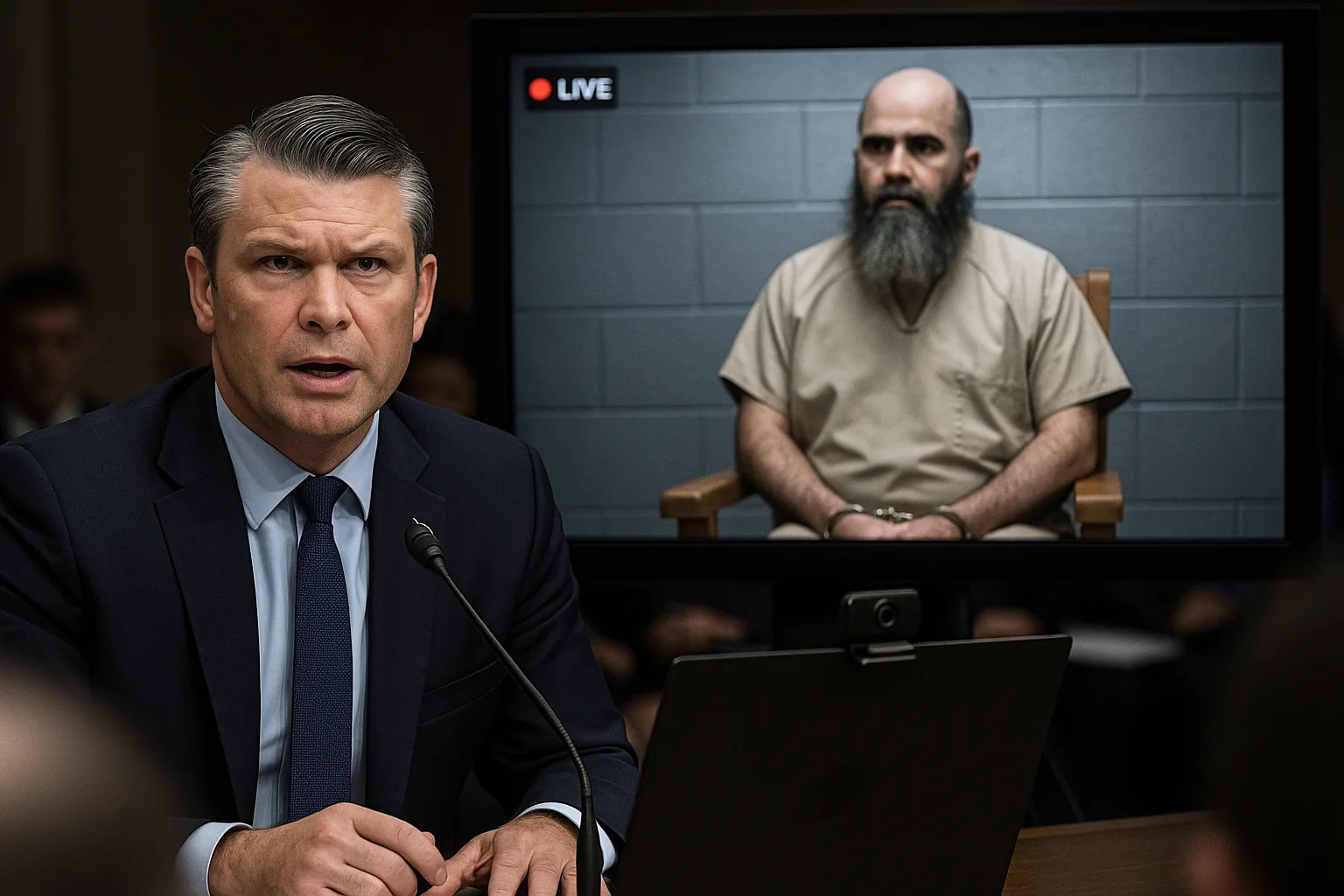
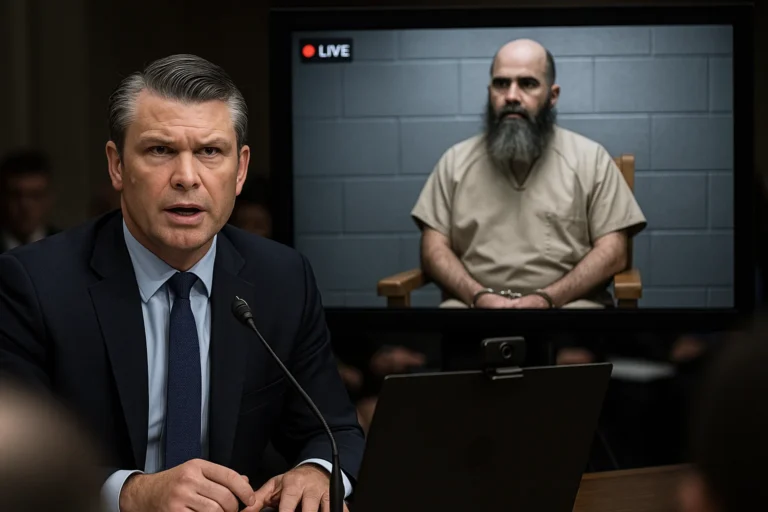
The announcement by Defense Secretary Pete Hegseth on October 8, 2026 that the Pentagon intends to broadcast a military execution live over the internet marks a sharp departure from how the United States has historically managed capital punishment in the armed forces. The plan — to carry out a military execution livestream of Nidal Malik Hasan, the former Army psychiatrist who killed 13 people at Fort Hood, Texas, in 2009 — immediately drew legal scrutiny, civil liberties objections, and a wave of questions about what existing military law actually permits when it comes to public access to executions. Understanding what has been confirmed, what remains unclear, and what the historical record shows about military capital punishment requires careful attention to the evidence available as of today.
What Hegseth Announced and What the Pentagon Confirmed
On October 8, 2026, Secretary Hegseth publicly stated that the Pentagon plans to livestream the execution of Nidal Malik Hasan, scheduled for December 3, 2026. The method will be death by firing squad. Hegseth added a layer of deliberate symbolism to the announcement: the execution would take place at Fort Hood, on a Thursday at approximately 1 p.m. — details chosen to mirror, as closely as possible, the approximate time, day of the week, and location of the 2009 attack itself.
A Pentagon official subsequently confirmed the plan to Reuters, stating: “The Secretary is correct. It will be livestreamed. Details will follow.” That confirmation is significant because it elevates the announcement beyond a single official’s statement into an institutional commitment, at least at the level of public communication. However, the official’s phrase “details will follow” is equally significant: as of the time of writing, the specific platform or platforms that would carry the stream, the technical arrangements, and the rules governing who could access or broadcast the feed have not been publicly disclosed.
The verified facts establish a clear core: a scheduled execution date, a confirmed method, a confirmed location, and a confirmed intention to livestream. What they do not yet establish is the precise legal mechanism under which the livestream would be authorized, or the logistical framework for carrying it out. Those gaps matter, and this article addresses them directly rather than filling them with speculation.
Nidal Malik Hasan and the Fort Hood Attack
Nidal Malik Hasan is a former United States Army psychiatrist. On November 5, 2009, he opened fire at Fort Hood, Texas, killing 13 people. The attack remains one of the deadliest mass shootings ever to occur on a United States military installation. Hasan was subsequently tried by a military court and sentenced to death. The sources available at the time of writing confirm his death sentence but do not specify the precise year in which that sentence was handed down, so no specific trial year is stated here as established fact.
Hasan has been held on military death row since his conviction. If the December 3, 2026 execution proceeds as announced, it will represent the first execution carried out by the United States military in more than six decades, according to the American Civil Liberties Union. It will also be the first time since 1945 that the US military has executed a prisoner by firing squad, according to Reuters. Both of those historical markers help explain why the announcement has generated such immediate and intense attention: this would not be a routine exercise of a rarely used power, but the revival of a practice that has been dormant for generations.
👉 Read also: Secretary Hegseth Creates Pentagon Office of Religious Affairs; Names Musk, Gingrich to 'Project Meridian'
The choice of firing squad as the method is itself notable. In recent decades, lethal injection has been the dominant method of execution in both federal civilian and military contexts, though its use has been the subject of sustained legal challenges related to the availability of drugs and the constitutionality of specific protocols. A return to the firing squad — and specifically the first such use by the military since 1945 — raises procedural and legal questions that courts may yet be asked to resolve before December 3.
The Military Execution Livestream Proposal: Why It Is Legally Unprecedented
No verified source currently available establishes a clear legal precedent for a military execution livestream in the United States. Civilian executions in the US have historically been conducted with tightly controlled witness access: a small pool of approved observers, typically including victim family members, legal representatives, journalists selected through a pool system, and corrections officials. Broadcast of those executions — whether by television or internet — has not been standard practice, and courts have addressed related questions about media access to executions in ways that have generally upheld state authority to restrict such access.
Military executions are governed by a distinct legal framework. The Uniform Code of Military Justice (UCMJ) and the Manual for Courts-Martial set out the procedures for capital cases in the armed forces, but neither document was written with live internet broadcasting in mind. The question of whether the Secretary of Defense has unilateral authority to order a livestream of a military execution — or whether such an order would require regulatory changes, congressional notification, or court approval — is one that legal scholars and practitioners are actively examining in the wake of the October 8 announcement.
The ACLU moved quickly to condemn the plan. Yasmin Cader, the organization’s deputy executive director, stated that the death penalty is cruel and immoral, framing the Pentagon’s announcement as an escalation rather than a legitimate exercise of state power. The ACLU’s condemnation addresses both the execution itself and the decision to broadcast it publicly, treating the livestream component as an aggravating factor rather than a neutral procedural choice. Whether that position will translate into legal action before December 3 remains to be seen, but the ACLU’s track record of litigating execution-related cases makes it a significant institutional voice in the debate now underway.
Historical Context: Military Executions in the United States
To understand how extraordinary the current moment is, it helps to trace the history of military capital punishment in the US. The military has carried out executions throughout American history, including during both World Wars. The most recent prior execution by the US military before the current announcement occurred more than six decades ago — a fact confirmed by the ACLU and consistent with the Reuters reporting that firing squad executions have not occurred since 1945.
During that long dormant period, military death row did not disappear. Prisoners sentenced to death by courts-martial have remained confined while their cases worked through layers of appellate review — a process that, in the military justice system, involves the service branch’s Court of Criminal Appeals, the Court of Appeals for the Armed Forces, and potential review by the United States Supreme Court. Hasan’s case has been in that appellate pipeline since his conviction. The fact that his execution is now scheduled for December 2026 indicates that the appellate process has, at least provisionally, run its course — though last-minute legal challenges are a standard feature of capital cases and cannot be ruled out.
👉 Read also: Christa Pike Execution: Tennessee Declines to Disclose Whether All-Female Team Carried Out Lethal Injection
The last federal civilian execution before a recent resumption occurred in 2003; the federal government then resumed executions in 2020 after a 17-year pause. That precedent — a long gap followed by a resumption — is not directly analogous to the military situation, because the legal frameworks differ, but it illustrates that institutional pauses in capital punishment do not necessarily reflect permanent policy changes. The military’s six-decade gap now appears to be ending, and the manner in which it ends — with a publicly announced livestream — is without historical parallel.
Symbolism, Procedure, and the Question of Public Interest
Hegseth’s decision to schedule the execution on a Thursday at approximately 1 p.m. at Fort Hood is an explicit act of symbolic alignment with the original crime. That kind of deliberate mirroring is unusual in the administration of capital punishment, where scheduling decisions are typically governed by logistical and legal considerations rather than symbolic ones. The announcement signals that the execution is being framed, at least in part, as a public act of accountability — one intended to be witnessed, understood, and connected to the harm caused in 2009.
Whether a military execution livestream serves legitimate public interest goals — transparency, accountability, closure for victims’ families — or whether it crosses into territory that courts or regulators would find impermissible is a question that legal and ethical commentators are actively debating. Proponents of transparency in government proceedings have sometimes argued for greater public access to executions on the grounds that citizens in a democracy should be able to observe how the state exercises its ultimate power. Opponents argue that broadcasting an execution risks sensationalizing state violence, potentially traumatizing viewers, and creating a spectacle inconsistent with the dignity that legal proceedings are expected to maintain.
Neither of those positions is established fact; both are assessments that different stakeholders are advancing in response to the October 8 announcement. What is established fact is that the Pentagon has confirmed the plan, that the ACLU has condemned it, and that the specific details of how the livestream will be conducted remain publicly unspecified as of today.
What Remains Unresolved Before December 3
Several concrete questions will need answers before the scheduled date. First, the platform or platforms through which the livestream would be broadcast have not been publicly identified. Second, the legal authority under which the Secretary of Defense can mandate public broadcasting of a military execution has not been publicly explained or cited. Third, the question of whether Hasan’s legal team will mount a last-minute challenge — either to the execution itself or specifically to the livestream component — has not been resolved. Fourth, the rules governing who can access, rebroadcast, or archive the stream have not been disclosed.
These are not minor administrative details. Each one carries legal weight. The Reuters report confirming the Pentagon’s announcement notes that details will follow, which means the public record on these points is still developing. Responsible coverage of this story requires distinguishing between what is confirmed — the date, the method, the location, the intention to livestream — and what is not yet established, including the full legal and logistical framework that would govern the broadcast.
The December 3, 2026 execution of Nidal Malik Hasan, if it proceeds as announced, will be a historically significant event on multiple levels: the end of a six-decade pause in military executions, the first use of the firing squad by the US military since 1945, and the first time a military execution has been livestreamed to a public audience. Each of those elements individually would be notable; together, they make this one of the most consequential developments in US military justice in generations, and one that will continue to generate legal, ethical, and procedural scrutiny in the weeks between now and the scheduled date.
This article was produced with AI assistance and reviewed editorially.

Political Ads in 2026 Midterms Contain False or Misleading Claims About Opponents

Trump Administration ‘Super Intelligence’ Accord Misspells ‘United States’ as ‘Unites States’

Trump Administration ‘Super Intelligence’ Accord Misspells ‘United States’ as ‘Unites States’

No Going Back PAC Ad Makes Misleading Claim About Roy Cooper and Rape Kits
