
Current Affairs
Trump Administration Claims on Medicaid Drug Savings and Taxpayer-Funded Ads Lack Substantiation
The Trump administration’s Medicaid drug savings announcements lack verifiable details, raising questions about transparency and accountability in health policy.

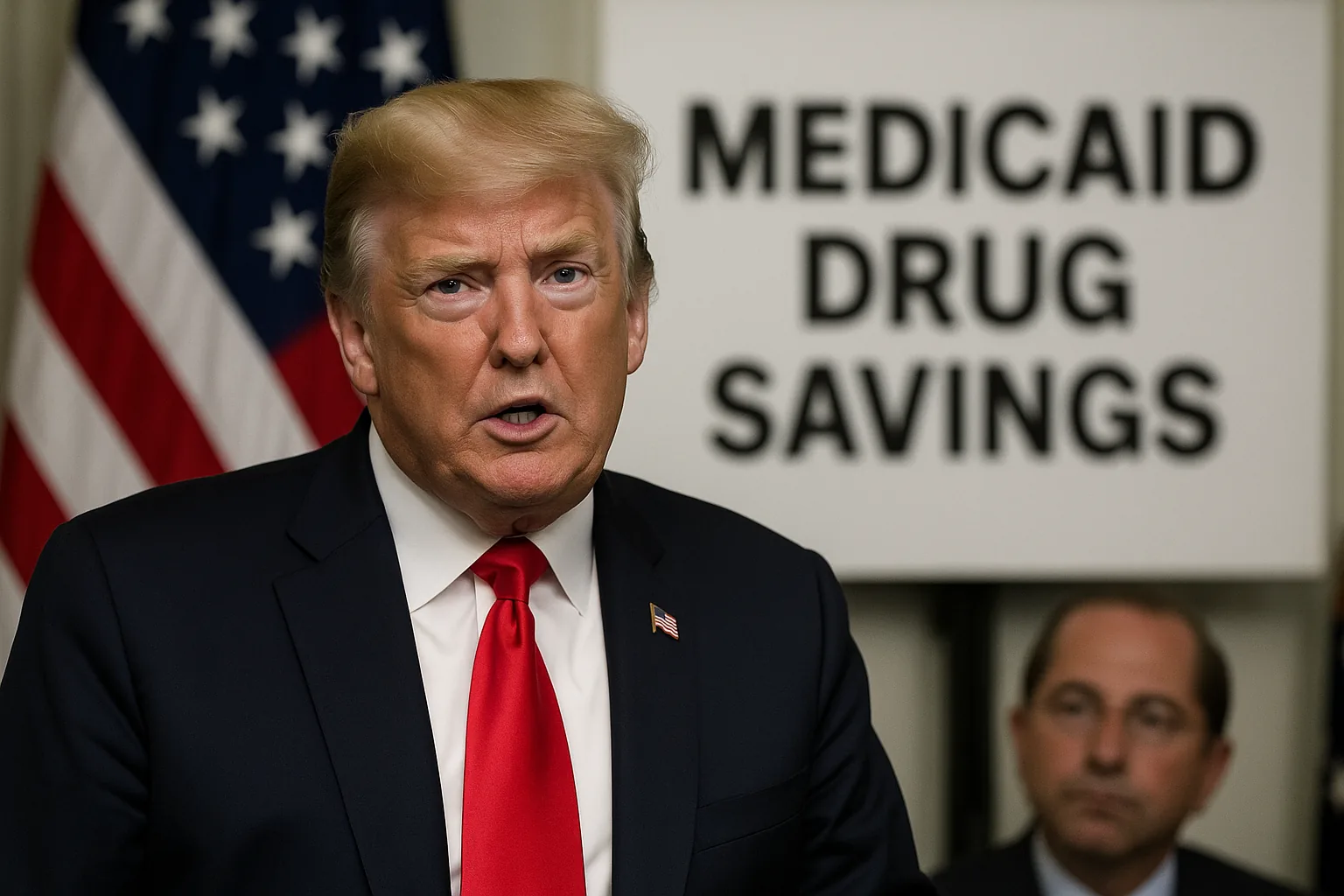
As the Trump administration enters the final stretch of 2026, two overlapping controversies are drawing scrutiny from policy analysts, legal scholars, and health advocates alike. The first involves sweeping White House claims about Medicaid drug savings that, despite generating significant headlines, remain short on verifiable detail. The second concerns a series of taxpayer-funded advertising campaigns that multiple legal experts say may violate a longstanding federal statute prohibiting the use of appropriated funds for government propaganda. Together, these controversies raise fundamental questions about transparency, accountability, and the boundaries of executive authority in the American health and communications policy landscape.
What the Administration Has Actually Said About Medicaid Drug Pricing
In September and October 2026, the Trump administration announced that all 50 states would be joining a new Medicaid drug pricing model, framing the move as a historic breakthrough in reducing prescription drug costs for low-income Americans. The announcement was accompanied by broad claims that Medicaid would save billions of dollars on prescription drugs — a figure that, if accurate, would represent one of the most significant pharmaceutical cost-reduction achievements in the program’s history.
The administration’s messaging has been consistent in its ambition: officials have repeatedly described the drug pricing model as a major policy win, one that would deliver tangible financial relief both to state Medicaid programs and to the federal budget. President Trump himself promoted the initiative publicly, lending it the full weight of the White House’s communications apparatus.
However, as fact-checkers and health policy researchers have noted, the details underpinning these claims remain murky at best. According to FactCheck.org’s October 2026 analysis, the administration has not provided the kind of verifiable documentation — specific drug names, pricing structures, contractual terms, or independently auditable savings projections — that would allow outside analysts to confirm the claimed benefits. The broad strokes are visible; the mechanics are not.
This matters for a straightforward reason: in health policy, the difference between a claimed saving and a realized one can be enormous. Drug pricing agreements frequently involve rebate structures, volume thresholds, and formulary conditions that make headline figures difficult to interpret without access to the underlying contracts. When those details are withheld, independent verification becomes impossible, and the public is left to take the administration’s word on faith.
Unanswered Questions From Health Policy Researchers
The Georgetown Center for Children and Families has been among the most prominent voices raising substantive concerns about the administration’s Medicaid drug pricing claims. In a detailed analysis, the center identified a series of unanswered questions about whether the Trump administration’s drug pricing deals would actually translate into meaningful cost savings for state Medicaid programs — the entities that would theoretically benefit most directly.
Those questions are not merely technical. They go to the heart of how Medicaid drug purchasing works in practice. State Medicaid programs already participate in complex rebate arrangements with pharmaceutical manufacturers, governed by federal law and administered through the Medicaid Drug Rebate Program. Any new pricing model must interact with these existing structures — and the nature of that interaction determines whether states actually see net savings or whether the announced model simply reshuffles existing financial flows without generating new value.
Among the concerns researchers have flagged: whether the new pricing model would layer on top of existing rebate agreements or replace them, whether states would retain flexibility to negotiate additional discounts, and whether the savings projections account for changes in drug utilization patterns that often accompany formulary restructuring. None of these questions have been answered publicly by the administration as of the time of writing.
👉 Read also: Political Ads Misrepresent Candidates' Tax and Social Security Positions
It is also worth noting the broader context in which these claims are being made. Medicaid serves tens of millions of low-income Americans, including children, pregnant women, people with disabilities, and elderly individuals who rely on the program for long-term care. Any genuine improvement in the program’s drug purchasing efficiency would be consequential and welcome. That is precisely why the lack of substantiation is frustrating to advocates: the stakes are high enough that vague promises are not a substitute for documented policy.
Historically, drug pricing reform efforts — from the Inflation Reduction Act‘s Medicare negotiation provisions to various state-level initiatives — have demonstrated that achieving durable savings requires not just announced agreements but sustained enforcement, robust monitoring, and transparent reporting. The absence of those elements from the administration’s public communications raises legitimate questions about whether the claimed Medicaid drug savings will materialize in practice.
The Taxpayer-Funded Advertising Controversy
Running parallel to the drug pricing debate is a separate but related controversy over White House advertising campaigns funded by taxpayer dollars. In September 2026, reports emerged that the Trump administration had been running a series of ads — the precise content and messaging of which have not been fully disclosed publicly — that critics characterized as promotional material for the administration’s own policy agenda rather than legitimate public information efforts.
The legal question at the center of this controversy is whether such advertising violates a federal statute that prohibits the use of congressionally appropriated funds for publicity or propaganda. This statute, which has been on the books for decades, was designed to prevent executive branch agencies from using public money to generate political support for their own programs or personnel. Legal experts consulted by multiple news organizations have suggested that the White House ads may run afoul of this prohibition.
As FactCheck.org reported in September 2026, experts question the White House’s defense of the taxpayer-funded ad spending. The administration has argued that the campaigns constitute legitimate public communications — informing citizens about government programs and services — rather than propaganda. Critics and legal scholars have pushed back on that framing, arguing that the line between informing the public and promoting the administration’s image is being deliberately blurred.
The distinction matters legally and practically. Government agencies routinely spend public funds on communications: public health campaigns, disaster preparedness messaging, benefit enrollment outreach, and similar initiatives all have clear public interest justifications. The propaganda statute does not prohibit all government communication; it targets material that is primarily designed to build political support for the administration or its officials rather than to serve a genuine informational purpose. Determining which side of that line a given ad campaign falls on requires examining its content, targeting, tone, and context — none of which the administration has made fully transparent.
Legal Challenges and the Propaganda Statute
The controversy has moved beyond academic debate. As of October 2026, at least two lawsuits have been filed challenging the Trump administration’s taxpayer-funded advertising campaigns, with plaintiffs alleging that the ads violate the federal prohibition on using appropriated funds for propaganda purposes. The Democratic National Committee is among those who have brought legal action, according to reporting on the litigation.
The legal theory underlying these suits is grounded in a well-established area of federal law. The prohibition on using appropriated funds for publicity or propaganda has been interpreted and applied by the Government Accountability Office and federal courts over many decades. While the precise boundaries of the statute remain a matter of legal interpretation — courts have not always drawn a bright line between permissible public information and impermissible propaganda — the existence of the law gives plaintiffs a credible legal hook on which to hang their challenges.
👉 Read also: Trump Claims U.S. Has 'Best Poverty Numbers Ever' in September 2026
What the courts ultimately decide will likely turn on the specific content of the ads and the administration’s documented rationale for producing and distributing them. If the ads are found to primarily serve a promotional function — boosting the administration’s approval ratings or building support for contested policy positions — rather than a genuinely informational one, the legal exposure could be significant. If the administration can demonstrate that the campaigns served legitimate public information purposes and were structured accordingly, the suits may fail.
Either way, the litigation itself is significant. It signals that the use of public funds for government communications is an area of active legal contestation, not settled practice, and that the boundaries of permissible executive branch communication are being tested in real time. For the public, the key question is simple: whose interests are being served when the government spends taxpayer money on advertising? The answer should be demonstrably the public’s — and when it is not clear that it is, legal challenges are a legitimate mechanism for accountability.
Why Transparency Is the Common Thread
Viewed together, the Medicaid drug savings controversy and the taxpayer-funded advertising dispute share a common thread: a pattern of public claims that outpace the publicly available evidence. In both cases, the administration has made assertions — about billions saved on prescription drugs, about the legitimacy of its communications spending — that cannot be independently verified because the underlying documentation has not been made available.
This is not merely a political critique. Transparency in government is a structural requirement for democratic accountability, not an optional courtesy. When an administration announces that a major federal health program will save billions of dollars, the public and their elected representatives have a legitimate interest in seeing the evidence that supports that claim. When an administration spends public money on advertising, citizens have a right to know what that money was spent on and why.
The mechanisms for enforcing these transparency norms include congressional oversight, independent audit functions like the Government Accountability Office, investigative journalism, and — as the current lawsuits demonstrate — litigation. Each of these mechanisms is currently being brought to bear on the Trump administration’s conduct in these two areas. Whether they will produce meaningful accountability remains to be seen.
For Medicaid specifically, the stakes extend well beyond political point-scoring. State Medicaid directors, hospital administrators, pharmacy benefit managers, and patient advocacy organizations all need accurate information about drug pricing structures to plan their operations and advocate effectively for their constituents. Vague claims of billions in savings, unaccompanied by the details that would allow those claims to be evaluated, are not merely unhelpful — they actively impede the planning and oversight that effective health system management requires.
What Accountability Would Look Like
For the Medicaid drug pricing claims, genuine accountability would require the administration to publish the actual terms of its drug pricing agreements, including the pricing benchmarks, rebate structures, eligibility conditions, and projected savings calculations — along with the assumptions underlying those projections. It would require an independent body, such as the Congressional Budget Office or the Medicare and Medicaid actuaries, to review those projections and offer a public assessment of their credibility. And it would require ongoing reporting on actual realized savings, not just projected ones, as the model is implemented across all 50 states.
For the advertising controversy, accountability would require full public disclosure of the ads’ content, the budget spent on their production and distribution, the targeting criteria used to reach audiences, and the administration’s documented rationale for characterizing the spending as legitimate public information rather than propaganda. The courts may ultimately compel some of this disclosure through the litigation process — but that process takes time, and the spending in question has already occurred.
In the meantime, the public is left navigating two significant policy stories — one about drug costs, one about government communications — in which the most important details remain unavailable for independent scrutiny. That is a transparency deficit with real consequences, both for the individuals who depend on Medicaid for their prescription drug coverage and for the broader principle that government claims about its own performance should be verifiable, not merely asserted. The administration has the information needed to resolve both controversies; the question is whether it will choose to share it.
This article was produced with AI assistance and reviewed editorially.

Political Ads in 2026 Midterms Contain False or Misleading Claims About Opponents

Trump Administration ‘Super Intelligence’ Accord Misspells ‘United States’ as ‘Unites States’

Trump Administration ‘Super Intelligence’ Accord Misspells ‘United States’ as ‘Unites States’

No Going Back PAC Ad Makes Misleading Claim About Roy Cooper and Rape Kits
