
Current Affairs
UK Government Overstates Free Bus Scheme Participation by Counting Journeys, Not Children
The UK government’s free bus scheme children claim of 14.5 million counts journeys, not unique children. The actual figure is approximately 7.5 million eligible participa

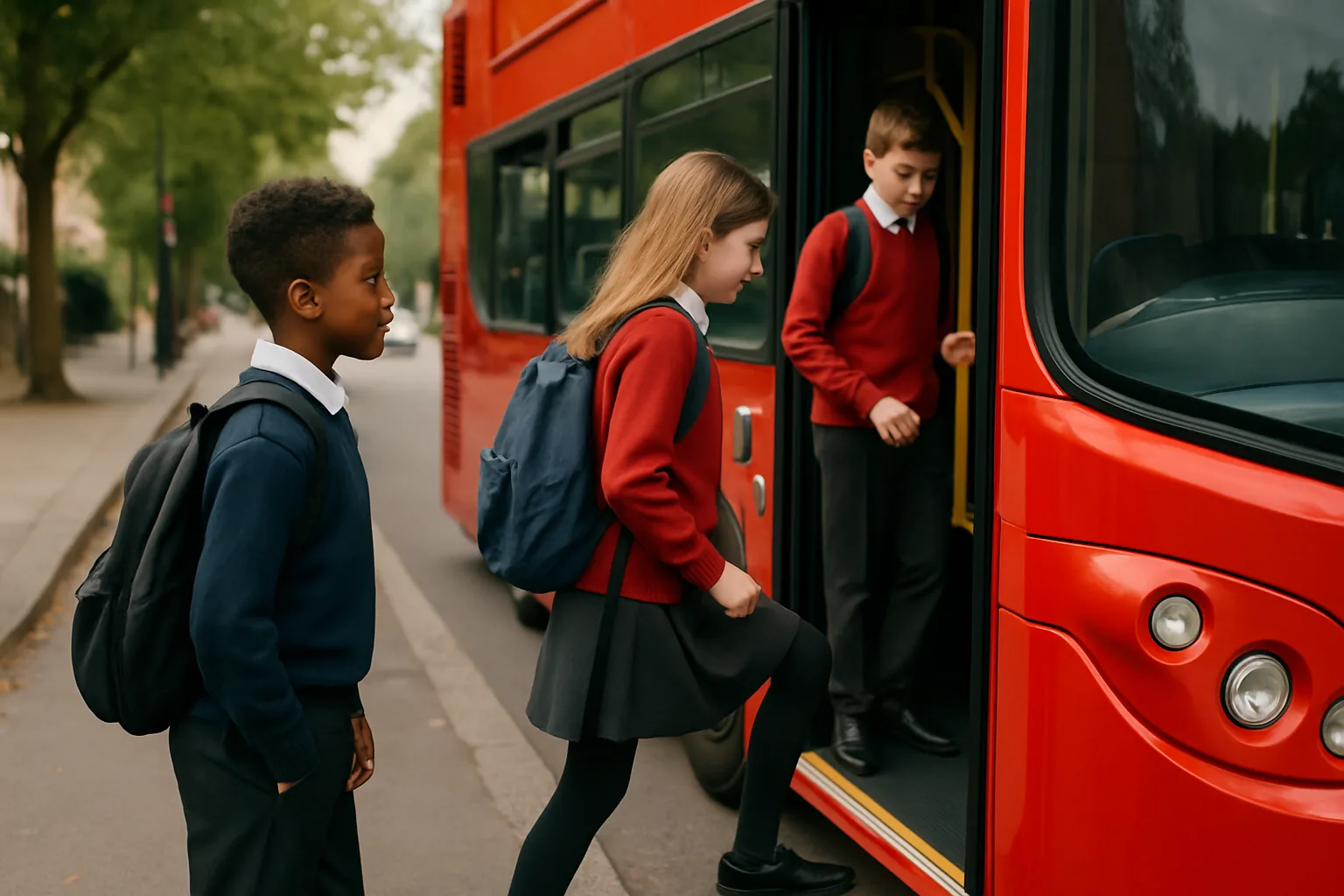
When a government announces that more than 14.5 million children have used a free travel initiative, the natural reading is that 14.5 million young people have benefited. That is precisely the impression created by a Department for Transport press release published in August 2026 — and it is not what the number actually means. The claim, repeated publicly by Transport Secretary Heidi Alexander MP, counts individual bus journeys, not unique children. Understanding the difference matters enormously when evaluating whether the free bus scheme children were meant to help has genuinely reached the scale the government suggested.
What the Government Actually Said
The Department for Transport’s official press release, published on the UK Government website, announced that the summer savings scheme had helped families cut costs with “over 14 million free bus journeys.” The headline figure of 14.5 million was presented in a context that strongly implied 14.5 million children had participated in the scheme.
Transport Secretary Heidi Alexander MP stated the figure in August 2026, and it circulated widely — including in video content published by fact-checking organisation Full Fact on TikTok. The framing of the announcement, using the phrase “children used the free bus scheme,” rather than “journeys were taken,” created a significant gap between the data and the impression it left on the public.
This is not a trivial distinction. A single child making ten bus trips during the summer contributes ten to the journey total. A child who used the scheme once contributes one. Both children count as one unique participant. When a scheme is designed to measure reach — how many young people actually benefited — journey counts and participant counts answer fundamentally different questions.
Journeys Versus Children: Why the Metric Matters
In transport policy, counting boardings or trips is standard practice for measuring network usage, fare revenue, and operational demand. It is a legitimate metric for those purposes. But it is the wrong metric to use when the stated goal is to communicate how many children were helped by a welfare or cost-of-living initiative.
Consider the arithmetic. If the scheme recorded 14.5 million journeys, and each participating child made an average of two journeys, the number of unique children would be approximately 7.25 million. If the average were three journeys per child, the figure drops to roughly 4.8 million. The government’s own press release did not clarify what average journey rate per child underpinned the headline number, making independent verification of the unique-children figure difficult from the published data alone.
The Herald Scotland’s fact-check confirmed that the 14.5 million figure counts individual journeys, not unique children, and that the Department for Transport subsequently corrected its characterisation of the statistic. That correction is significant: it acknowledges that the original framing was not an accurate description of how many children participated in the free bus scheme for children under 16 in England.
The Scope of the Scheme Itself
The scheme provided free bus travel for children under 16 in England. That eligibility criterion sets the outer boundary of potential reach. England’s population of children under 16 runs into several millions, meaning the scheme was, in principle, broadly accessible. The question of how many actually used it — and how often — is precisely what the journey-versus-children confusion obscures.
Free travel schemes for young people have a well-established policy rationale: reducing the cost burden on families, improving access to education and leisure, and encouraging early habits of public transport use. When governments report on these schemes, the metric that most directly answers whether those goals were met is the number of unique beneficiaries, not the volume of trips generated. A scheme that gave one million children fifteen free journeys each would produce 15 million journey-boardings but reach far fewer families than a scheme that gave 7.5 million children two journeys each — even though both produce similar headline numbers.
This is why the choice of metric in official communications is not merely a technical footnote. It shapes public understanding of whether public money achieved its intended social purpose, and it influences how parliamentarians, journalists, and voters assess the value of the initiative.
How the Misleading Framing Spread
The Department for Transport’s press release used language that conflated journeys with children. The phrase “children used the free bus scheme” appeared alongside the 14.5 million figure, and without an explicit clarification that this was a journey count, most readers — including journalists — would reasonably interpret it as a headcount of individual children.
Transport Secretary Heidi Alexander MP repeated the figure publicly, amplifying its reach. Full Fact, the UK-based independent fact-checking organisation, flagged the discrepancy in content published on its TikTok channel, drawing attention to the mismatch between the figure cited and what it actually measured. The Herald Scotland’s fact-check provided further detail, confirming that the DfT acknowledged the correction.
This pattern — a statistically defensible number deployed in a misleading framing — is one of the more common forms of official miscommunication. The 14.5 million journeys figure is not fabricated. The scheme did generate that volume of trips. What is inaccurate is the implication that 14.5 million distinct children benefited, which the data does not support and which the government itself subsequently walked back.
What a Transparent Report Would Look Like
Good practice in reporting on a free bus scheme for children would include at minimum three figures: the total number of journeys taken, the number of unique child participants, and — where possible — the average number of journeys per child. Together, these give a complete picture of both the scheme’s intensity of use and its breadth of reach.
It would also distinguish between eligible children (those who qualify under the scheme’s age and residency criteria) and participating children (those who actually used a free pass or boarded a free journey). Eligibility and participation are not the same, and conflating them — or using journey counts as a proxy for participation — produces exactly the kind of overstated headline that erodes public trust in official statistics.
The UK Statistics Authority has previously issued guidance to government departments on the responsible use of statistics in public communications, emphasising that figures should not be presented in ways that create false impressions of scale or impact. The Department for Transport’s August 2026 press release did not meet that standard, as its own subsequent correction implicitly acknowledged.
The Verdict on the Free Bus Scheme Children Figures
The claim that over 14.5 million children used England’s free bus scheme is misleading. The 14.5 million figure is real — it counts individual journeys made under the scheme. But the Department for Transport and Transport Secretary Heidi Alexander MP presented it in a way that strongly implied 14.5 million unique children had participated, which is not what the data shows. The DfT later corrected this characterisation, confirming that the original framing did not accurately represent the statistic. A journey count and a child headcount answer different questions, and using one to imply the other — particularly when communicating the reach of a cost-of-living support scheme — misleads the public about the programme’s actual scale.
Transparency about how participation in the free bus scheme for children is measured is not a bureaucratic nicety; it is the minimum standard required for meaningful public accountability. When the headline number is corrected quietly after the fact, the misleading impression has already done its work. The more durable fix is to publish both metrics — journeys and unique participants — from the outset, so that the public, parliament, and the press can assess the scheme’s reach on accurate terms from day one.
This article was produced with AI assistance and reviewed editorially.

Political Ads in 2026 Midterms Contain False or Misleading Claims About Opponents

Trump Administration ‘Super Intelligence’ Accord Misspells ‘United States’ as ‘Unites States’

Trump Administration ‘Super Intelligence’ Accord Misspells ‘United States’ as ‘Unites States’

No Going Back PAC Ad Makes Misleading Claim About Roy Cooper and Rape Kits
