
Current Affairs
Trump claims Russia and Ukraine agreed to ‘energy ceasefire,’ but Zelenskyy says it’s ‘news for me’
President Trump announced a Russia Ukraine energy ceasefire on October 11, 2026, but Ukrainian leader Zelenskyy called it ‘news for me,’ with no official confirmation fro

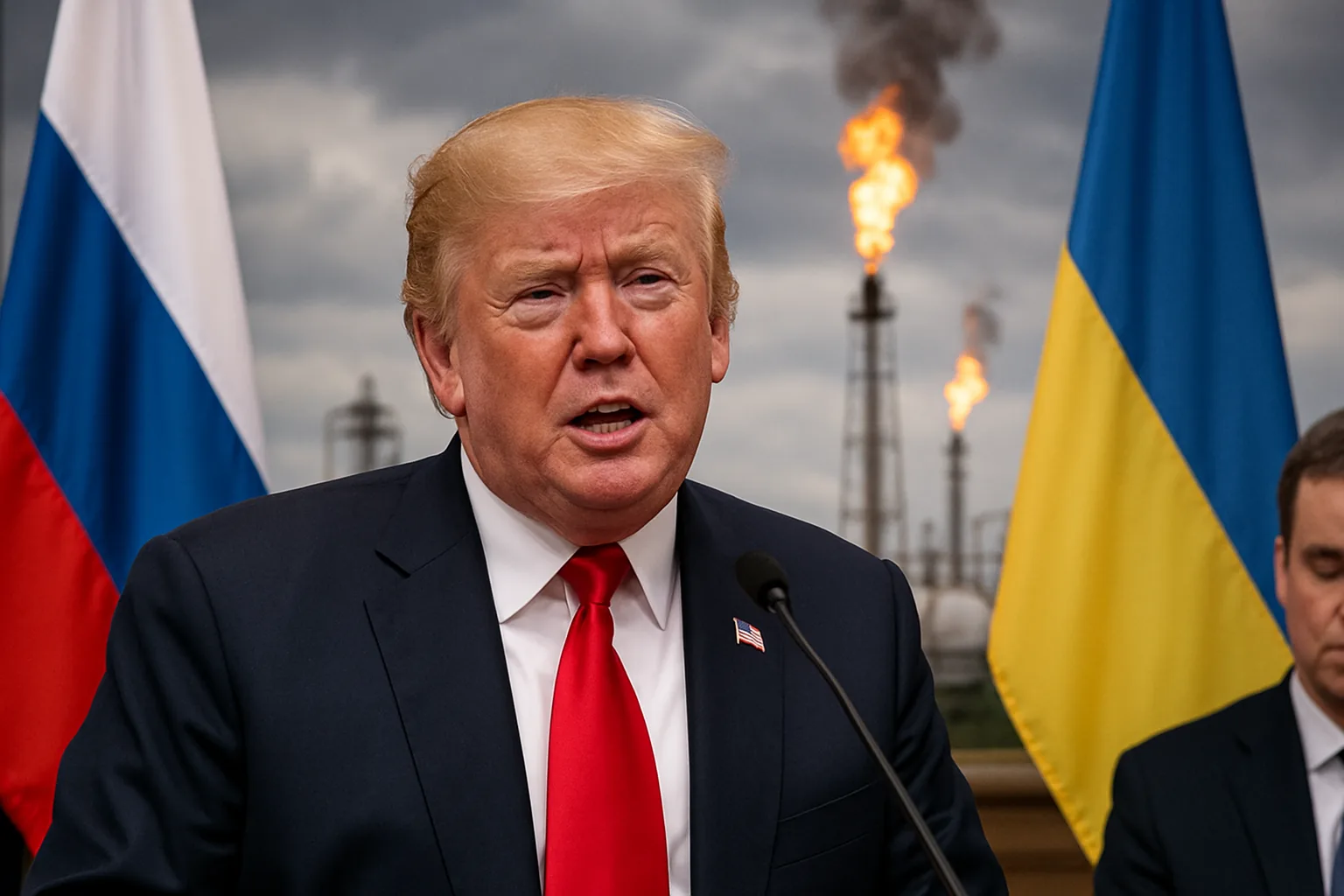
On October 11, 2026, U.S. President Donald Trump took to social media to announce that Russia and Ukraine had reached a russia ukraine energy ceasefire agreement, declaring it effective immediately and warning both sides, “Do not break it!” The announcement landed like a thunderclap — but within hours, Ukrainian President Volodymyr Zelenskyy publicly described the news as, in his own words, “news for me.” That single phrase encapsulated a broader problem: neither Kyiv nor Moscow had confirmed any such deal, the White House provided no supporting documentation, and the announcement bore a striking resemblance to a nearly identical claim Trump had made just one month earlier — a claim that proved hollow when both sides continued striking each other’s energy infrastructure.
What Trump Actually Said — and What He Didn’t
Trump’s October 11 social media post was characteristically brief and declarative. It stated that Russia and Ukraine had agreed to a ceasefire covering energy infrastructure, that the agreement was effective immediately, and that both parties had signed on. The post concluded with the pointed directive: “Do not break it!” — language that conveyed urgency but offered nothing by way of substance.
Critically, Trump offered no details on the ceasefire’s terms. There was no accompanying White House fact sheet, no joint statement from diplomatic channels, no named intermediaries, and no specified scope — meaning it was entirely unclear which categories of energy infrastructure were covered, what enforcement mechanisms existed, or what consequences were envisioned for violations. The White House did not immediately clarify the president’s post or add any detail to it, leaving journalists, foreign governments, and even Ukraine’s own leadership scrambling to understand what, if anything, had actually been agreed.
That information vacuum is not a minor procedural gap. In diplomatic practice, a ceasefire — even a partial or sectoral one — requires at minimum a shared understanding between the parties of what they are agreeing to stop doing, when, and under what conditions. None of that was present in Trump’s announcement. What existed was a unilateral declaration by a third party, made on social media, with no corroborating documentation from either of the two nations ostensibly bound by it.
Zelenskyy’s Response Contradicts the Core Claim
The most direct rebuttal to Trump’s assertion came from Zelenskyy himself. Speaking publicly after the announcement, the Ukrainian president said the energy ceasefire was “news for me” — a phrase that, in diplomatic terms, is about as close to a flat denial as a head of state typically offers without triggering an open confrontation with an ally. Ukraine, which depends heavily on U.S. military and financial support, was clearly navigating a delicate position: it could not afford to antagonize Washington, but it also could not pretend to have agreed to something it had not.
👉 Read also: Trump Claims Medicaid Drug Savings Through 'GENEROUS' Model, But Evidence Remains Unclear
Zelenskyy’s subsequent statement threaded that needle carefully. He said: “Ukraine supports the ceasefire, and it is important that Russia support it as well. We are awaiting details from the American side.” Read closely, this statement is not a confirmation of an agreement — it is a conditional expression of willingness, contingent on Russia’s participation and dependent on details that Ukraine had not yet received. In other words, Zelenskyy was saying Ukraine would support a ceasefire if one existed and if Russia honored it, not that Ukraine had already agreed to one.
A senior Ukrainian official told The Kyiv Independent that Ukraine was caught off guard by the announcement — language that makes clear the announcement was not the product of negotiation in which Ukraine participated, but rather a surprise declaration made without Kyiv’s foreknowledge or formal consent.
A Pattern: The September 2026 Precedent
What makes the October 11 announcement particularly significant is that it was not the first time Trump had made a nearly identical claim. Approximately one month before, in September 2026, Trump made a similar announcement asserting that Russia and Ukraine had reached an energy ceasefire understanding. The outcome of that earlier announcement was unambiguous: both sides continued their aerial attacks on each other’s energy facilities in the days and weeks that followed, rendering the claimed ceasefire effectively meaningless in practice.
This precedent is essential context. It means that as of October 11, 2026, Trump was repeating a type of claim that had already failed to correspond to observable reality once before. The pattern raises a straightforward evidentiary question: what, if anything, was different this time that would lead to a different outcome? Trump’s October 11 post provided no answer to that question — no new mechanism, no new guarantors, no new consequences for non-compliance.
For fact-checkers and analysts reviewing the claim, the September precedent is not merely background color. It is directly relevant to assessing whether the October claim reflected a genuine diplomatic development or a repetition of an unverified assertion. When a claim of the same type, made by the same person, previously proved unsubstantiated, the burden of evidence for the subsequent claim is correspondingly higher — not lower.
What the Russia Ukraine Energy Ceasefire Claim Lacks
A genuine russia ukraine energy ceasefire, if one were reached, would be expected to produce a specific and verifiable evidentiary trail. That trail would typically include at minimum one or more of the following: a joint statement from Russian and Ukrainian officials, a communiqué from a mediating party such as the United Nations or a neutral government, confirmation from the Kremlin, confirmation from the Ukrainian presidential office, or a written agreement accessible to the public or to credentialed journalists.
👉 Read also: Deepfake and Out-of-Context Video Compilations Spread False Narratives About Ukraine, Trump, and School Violence
As of the fact-checking window covering October 13–15, 2026, none of these elements were present. Neither Moscow nor Kyiv immediately commented on the announcement in a manner that confirmed its substance. Ukraine said it had no knowledge of such an agreement. The White House added no clarifying documentation. Russia’s position remained unconfirmed either way — meaning it is not possible to state as established fact that Russia formally agreed to the ceasefire, nor that Russia formally rejected it. What can be stated is that the evidence required to support Trump’s assertion of mutual agreement was entirely absent.
This is a meaningful distinction. Trump’s post did not say “the United States is proposing an energy ceasefire” or “negotiations are underway.” It stated, as a completed fact, that both sides had agreed. That is a specific, falsifiable claim — and the available evidence does not support it.
Why This Matters Beyond the Immediate Claim
The stakes of a russia ukraine energy ceasefire, were one genuinely achieved, would be considerable. Energy infrastructure — power grids, heating systems, fuel depots, and transmission lines — has been a persistent target throughout the conflict. Attacks on these systems affect civilian populations directly, particularly as winter approaches in the Northern Hemisphere. A genuine, verified halt to such strikes would represent a meaningful humanitarian development, even in the absence of a broader military ceasefire.
That is precisely why the evidentiary gap in Trump’s announcement matters so much. When a claim of this magnitude — one that would affect civilian lives and international diplomatic dynamics — is made without supporting evidence, and when the party supposedly party to the agreement says it was “news for me,” the responsible course is to treat the claim as unverified rather than established. Reporting it as fact, or allowing it to circulate unchallenged, risks creating a false sense that a protection for civilian infrastructure is in place when no such protection has been confirmed.
There is also a broader diplomatic dimension. Unverified ceasefire announcements, particularly ones that quickly prove hollow, can erode the credibility of future diplomatic efforts. If both Russia and Ukraine observe that a claimed agreement generates international headlines regardless of whether they actually agreed to anything, the incentive structure for genuine negotiation is distorted. The September 2026 precedent — in which a similar announcement was followed by continued attacks — illustrates this risk in concrete terms.
The NBC News reporting on Zelenskyy’s reaction captures the essential tension: a U.S. president asserting a completed bilateral agreement, and the leader of one of the two supposed parties saying he had not heard of it. That gap — between assertion and confirmation — is the story. As of October 15, 2026, it remains unbridged by any verified evidence, and the claim that Russia and Ukraine had mutually agreed to an energy ceasefire remains, on the available record, unsubstantiated.
This article was produced with AI assistance and reviewed editorially.

Political Ads in 2026 Midterms Contain False or Misleading Claims About Opponents

Trump Administration ‘Super Intelligence’ Accord Misspells ‘United States’ as ‘Unites States’

Trump Administration ‘Super Intelligence’ Accord Misspells ‘United States’ as ‘Unites States’

No Going Back PAC Ad Makes Misleading Claim About Roy Cooper and Rape Kits
