
Current Affairs
AI-Generated Video Deepfakes in Political and Public Figure Content
The rise of AI-generated video manipulation has introduced one of the most disruptive challenges in modern media literacy. Political deepfakes — synthetic

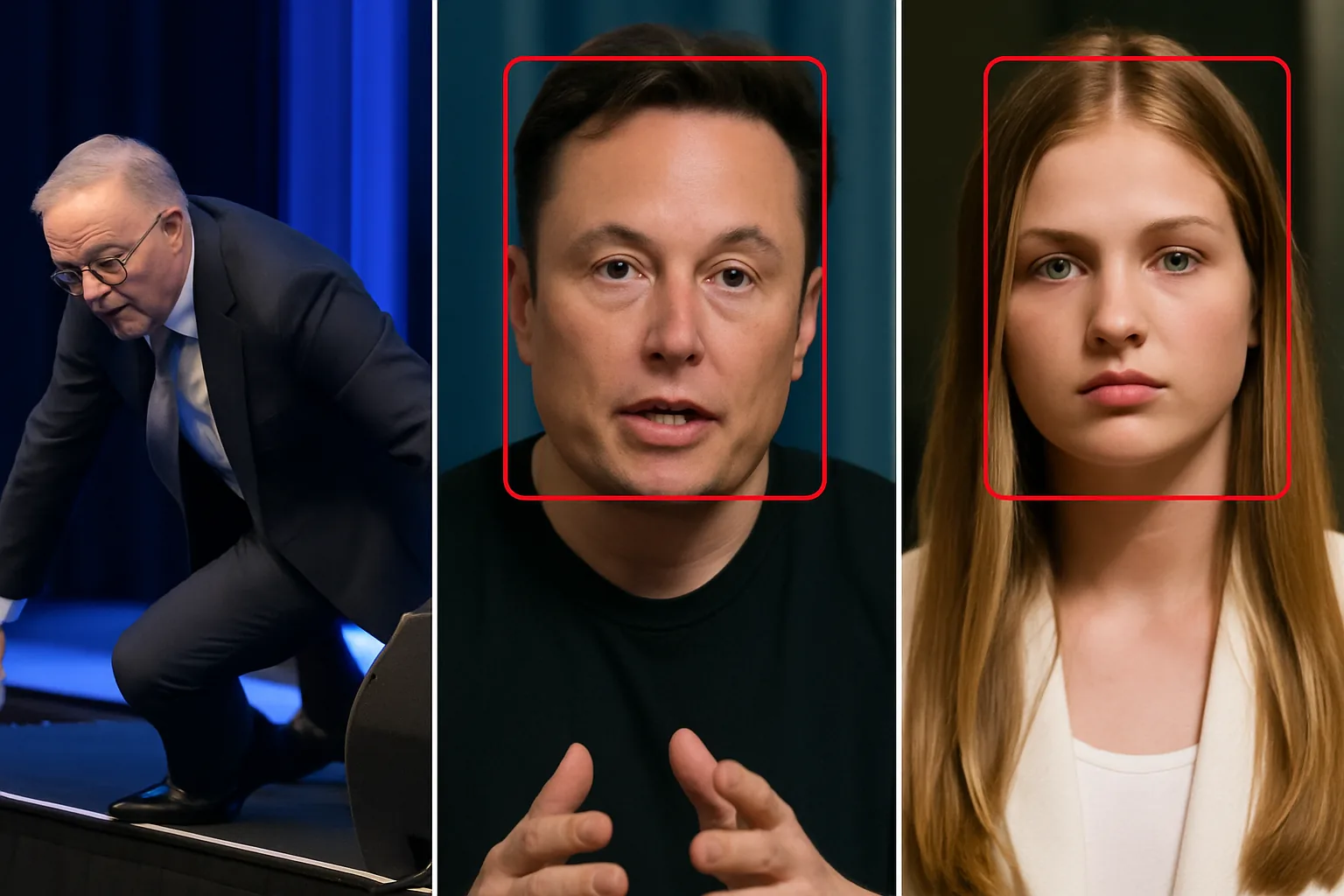
The rise of AI-generated video manipulation has introduced one of the most disruptive challenges in modern media literacy. Political deepfakes — synthetic videos that place real public figures in fabricated scenarios — are spreading faster than fact-checkers, regulators, and platforms can respond. What was once a niche technical curiosity has become a mainstream tool for disinformation, capable of putting words, actions, and situations into the mouths and bodies of politicians, royals, and business leaders who never experienced them.
What Deepfakes Actually Are — and Why the Definition Matters
Precision in language is essential when discussing this technology. Deepfakes are images, audio recordings, or videos generated or modified using artificial intelligence to depict real or fictional people, according to the University of Rochester’s explainer on the technology. That definition is deliberately broad, and for good reason: the category includes not just face-swapped videos, but also voice clones, AI-generated still images of real people, and hybrid content that blends authentic footage with synthesised elements.
The breadth of the definition matters because it shapes how laws are written, how platforms set content policies, and how fact-checkers classify what they find. A video that uses a real politician’s genuine voice, spliced into a fabricated context, may not be a deepfake in the narrow technical sense — but it can cause equivalent harm. Conversely, some AI-generated images are clearly satirical or artistic, and treating all synthetic media as equally dangerous would both overstate the threat and undermine legitimate creative expression.
Understanding these distinctions is the first step toward informed verification. When a video of a public figure circulates showing something extraordinary, the relevant questions are not just “is this real?” but “what kind of manipulation, if any, has occurred?” — and those questions require different tools depending on the answer.
The Scale and Spread of Fabricated Public-Figure Content
Viral synthetic videos depicting politicians, monarchs, and prominent business figures have become a recurring pattern in fact-checking workflows around the world. The specific incidents that circulate — a leader apparently suffering a public accident, a celebrity apparently endorsing a financial scheme, a public figure apparently wearing something scandalous — tend to share common features: they are emotionally provocative, they are visually plausible at first glance, and they are designed to travel quickly on social media before verification can catch up.
Fact-checking organisations across multiple countries have reported that AI-generated or AI-manipulated content has grown to represent a significant and increasing share of the claims they investigate. While a precise universal figure is difficult to establish — different organisations use different classification systems, and the category itself is still being defined — the directional trend is consistent: synthetic media cases that would have been rare a few years ago are now routine.
👉 Read also: AI-Generated Videos Falsely Attributed to Bill Gates, Elon Musk, and Public Figures
The targets are not random. Public figures with high name recognition and strong emotional associations — heads of government, members of royal families, technology entrepreneurs — are disproportionately impersonated. Their faces are well-represented in training data, their voices are widely available in audio archives, and audiences already have strong prior beliefs about them that fabricated content can exploit or subvert. A deepfake of an obscure local official is unlikely to go viral; a deepfake of a sitting prime minister has a built-in audience.
Detection: What Verification Tools Can and Cannot Do
A range of detection tools now exists, and fact-checkers have developed both technical and non-technical methods for assessing whether video content is authentic. No single method is definitive, and the field is engaged in a continuous arms race between generation and detection capabilities.
Technical Detection Methods
AI-powered detection software analyses video for artefacts that are characteristic of synthetic generation: inconsistent blinking patterns, unnatural skin texture at the edges of faces, lighting that does not match the apparent environment, and audio that is slightly out of phase with lip movements. Some tools assign a probability score — expressed as a percentage — indicating the likelihood that content was AI-generated. These scores can be useful as a starting signal, but they are not verdicts. A high probability score warrants deeper investigation; it does not, on its own, constitute proof of fabrication.
Reverse image and video search remains a foundational technique. Searching for the earliest known appearance of footage, and tracing the chain of shares back to an original source, often reveals whether a video has been misattributed, clipped out of context, or entirely fabricated. Metadata analysis — examining file properties, encoding signatures, and upload timestamps — can provide additional signals, though metadata is easily stripped or altered.
Non-Technical Verification
Technical tools are most powerful when combined with contextual verification. Checking whether credible news organisations covered the event depicted, whether the public figure or their representatives have responded, and whether the scenario is consistent with known facts about the time and place shown — these steps often resolve ambiguity faster than software analysis alone.
Source triangulation — the practice of requiring at least two or three independent, primary sources before treating a claim as established — applies as much to video as to text. A video that cannot be traced to any original news report, that has no corroborating eyewitness accounts, and that depicts something extraordinary should be treated with significant scepticism regardless of how realistic it appears.
The Regulatory Landscape: Where Laws Have and Have Not Kept Up
Legislation targeting political deepfakes has expanded substantially in the United States, though coverage remains uneven and enforcement is largely untested. California and Texas were the first states to enact election deepfake laws, both doing so in 2019. For several years, they remained outliers. The pace accelerated sharply: most states adopted election deepfake laws in 2024 or later, reflecting the rapid escalation of the problem during and after that election cycle.
👉 Read also: AI-Generated Video of Australian PM Albanese Collapsing Spreads Online
As of the National Conference of State Legislatures’ June 2026 report, 31 states have enacted laws addressing AI-generated deepfakes in election contexts. The approaches vary considerably. Of those 31 states, 28 require disclosures — typically mandating that campaign materials using AI-generated content be labelled as such. A smaller number go further: Maryland, Minnesota, and Texas have enacted outright prohibitions on certain categories of election deepfakes, rather than merely requiring transparency about their use.
Louisiana’s law takes a specific approach to voice cloning, requiring AI warnings on campaign advertisements that falsely depict candidates and on campaign calls that use artificial versions of public figures’ voices. This addresses a form of synthetic media that is often overlooked in discussions focused on video: audio-only deepfakes, which can be even harder for listeners to detect than video manipulation.
The Brennan Center for Justice’s analysis of synthetic media regulation in the political arena identifies several structural limitations in the current legislative landscape. Disclosure requirements depend on creators complying voluntarily or being identified and prosecuted — neither of which is straightforward when content is produced anonymously or from outside the jurisdiction. Prohibition laws face First Amendment challenges in the United States, where political speech receives strong constitutional protection even when it is false. And all state-level laws are limited in their reach when content is produced abroad and distributed through platforms headquartered elsewhere.
Why Existing Frameworks Struggle With This Problem
The mismatch between the speed of synthetic media production and the pace of legal and institutional response is not a temporary gap — it reflects a structural feature of how technology and regulation interact. Laws are written in response to documented harms; by the time a harm is documented, understood, and translated into enforceable rules, the technology enabling it has typically advanced further.
Platform policies face similar constraints. Content moderation at scale relies heavily on automated systems, which are less reliable at detecting AI-generated content than at detecting, say, known child exploitation material that can be matched against a hash database. Synthetic video does not have a fingerprint that persists across re-encodings and re-uploads in the same way.
There is also a fundamental tension in how political deepfakes are defined for regulatory purposes. Satire has always involved exaggerated or fictional depictions of public figures. A clearly labelled parody video that shows a politician doing something absurd occupies very different legal and ethical territory from a realistic fabrication intended to deceive. Drawing that line in statute — and then applying it consistently across thousands of individual cases — is genuinely difficult, and legal scholars continue to debate where the boundaries should fall.
The practical implication for audiences is that regulatory protection, while growing, cannot be relied upon as a primary defence against encountering and being misled by synthetic media. Media literacy — the habit of asking where a video came from, who benefits from its spread, and whether it has been verified by independent sources — remains the most accessible and reliable tool available to anyone who consumes information online. Verification is not a specialist skill reserved for journalists; it is a practice that any reader can apply, and the stakes of applying it carefully have rarely been higher.
This article was produced with AI assistance and reviewed editorially.

Political Ads in 2026 Midterms Contain False or Misleading Claims About Opponents

Trump Administration ‘Super Intelligence’ Accord Misspells ‘United States’ as ‘Unites States’

Trump Administration ‘Super Intelligence’ Accord Misspells ‘United States’ as ‘Unites States’

No Going Back PAC Ad Makes Misleading Claim About Roy Cooper and Rape Kits
