
Current Affairs
UK Political Claims Misattribute Policy Origins and Misrepresent Opposition Proposals
The landscape of UK political fact check claims has grown dramatically more complex in recent years, as political parties across the spectrum compete to sh

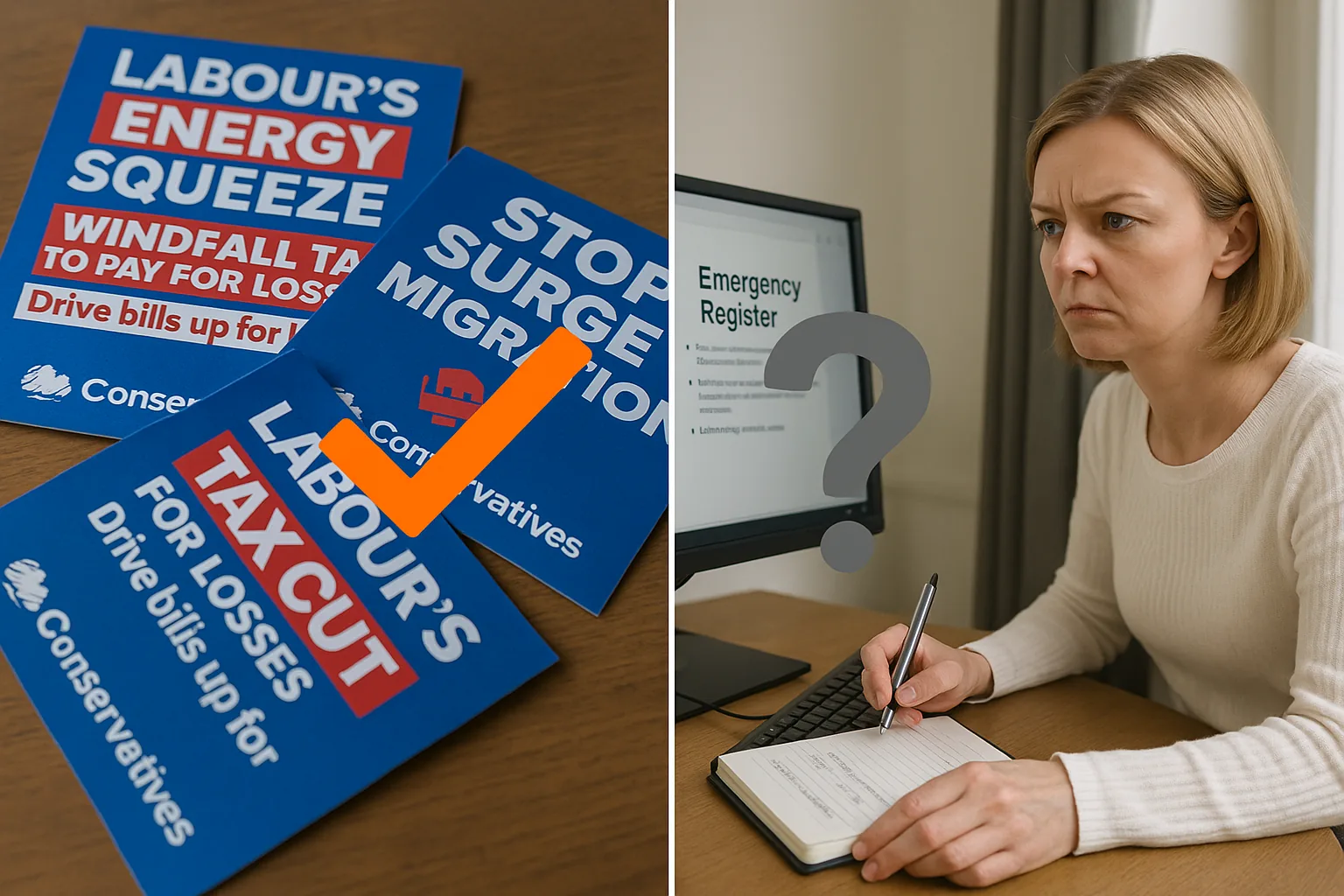
The landscape of UK political fact check claims has grown dramatically more complex in recent years, as political parties across the spectrum compete to shape public narratives about policy origins, spending commitments, and national security proposals. With 71% of Britons believing there is more lying and misuse of facts in politics than there was 30 years ago — a figure documented in Full Fact’s written evidence to Parliament — the demand for rigorous, source-anchored verification has never been greater. Understanding how misattribution errors and mischaracterisations actually work, what the established fact-checking infrastructure looks like, and how citizens can evaluate contested claims is not merely an academic exercise: it is a practical skill for navigating contemporary British democracy.
Why UK Political Claims So Often Misattribute Policy Origins
One of the most persistent categories of error in British political discourse is the misattribution of policy origin — the practice, whether deliberate or inadvertent, of crediting or blaming the wrong party for a law, levy, or spending decision. This pattern appears across the political spectrum and is particularly common during election campaigns, when parties produce high volumes of printed and digital material under deadline pressure, and when the incentive to frame opponents unfavourably is at its strongest.
The mechanics of misattribution are worth understanding carefully. A policy may pass through multiple legislative stages, with different governments extending, modifying, or reversing what a predecessor introduced. When a later government inherits and continues a policy, both parties can claim some ownership — and both can be blamed. The result is a fertile environment for selective framing. A party booklet or campaign leaflet that attributes a policy entirely to an opponent, when that party merely continued what the publisher’s own government began, is engaging in a form of misleading communication even if no individual sentence is technically false.
BBC Verify, one of the UK’s most prominent real-time fact-checking operations, focused heavily on precisely this kind of selective attribution during the 2024 general election campaign. Its analysts tracked claims at the forefront of public debate, identifying cases where figures and policy credits were presented in ways that omitted crucial legislative context. The challenge for any fact-checker in such cases is not simply to say “that’s wrong” but to reconstruct the full timeline: who introduced the measure, who extended it, who voted for or against it, and what each party’s stated position was at each stage.
For readers encountering a UK political fact check claim about policy origins, the first practical question to ask is always: at what point in the policy’s history is this claim being made? A policy that began under one government and was extended under another does not belong cleanly to either party’s record. Responsible political communication acknowledges that complexity; misattribution, by contrast, flattens it.
The 2024 Election Campaign as a Case Study in Disputed Claims
The 2024 general election campaign generated an unusually high volume of disputed claims, and the UK’s fact-checking infrastructure was tested at scale. BBC Verify, Channel 4 FactCheck, and Full Fact — the three principal UK fact-checking organisations identified in Reuters Institute research — all deployed real-time verification teams during the campaign period, tracking claims made in debates, press releases, and party literature.
One of the most scrutinised moments came during the first leaders’ debate, when Rishi Sunak asserted that Labour’s spending plans would put taxes up by £2,000 per family. Notably, he repeated this figure 11 times in a single debate — a repetition strategy that fact-checkers at BBC Verify documented and examined. The figure itself was contested: it derived from a particular set of assumptions about how Labour’s spending commitments would be funded, assumptions that Labour disputed and that independent economists assessed differently depending on their modelling choices. The claim illustrates a pattern common to UK political discourse: a figure that is not straightforwardly false but that depends on contested methodology being presented as though it were settled arithmetic.
→ Read also: Fact-Check: Claims About UK Energy Policy and Civil Defense
This is a meaningfully different category of error from outright fabrication. When a party states a number that derives from a real calculation but one that uses assumptions its opponents reject, the appropriate verdict is not simply TRUE or FALSE — it is MISLEADING, because the figure carries a false impression of precision and consensus that the underlying evidence does not support. Fact-checkers must explain not just what the number is but where it comes from, what it assumes, and why reasonable analysts might reach different figures.
Reform UK’s campaign launch generated a separate cluster of disputed claims, particularly around migration figures. Left Foot Forward documented multiple instances in which Reform’s published materials cited statistics in ways that omitted definitional context — presenting net migration figures, for example, without distinguishing between categories of migrant or acknowledging the methodological changes that had affected how those figures were compiled. Again, the individual numbers were often drawn from real official sources; the problem was the framing, not the data.
How Mischaracterisation of Opposition Proposals Circulates
A second major category of UK political fact check claims involves not policy origins but the mischaracterisation of what an opponent has actually proposed. This is structurally different from misattribution: rather than crediting the wrong party with a past action, it involves distorting what another party is currently offering. The distortion may involve conflating a proposal from one party with the policies of another, describing a consultation document as settled government policy, or stripping a proposal of the qualifications and conditions that give it its actual meaning.
National security and defence policy is a particularly sensitive area for this kind of mischaracterisation, because proposals in this space carry strong emotional valence and are easily sensationalised. A proposal for a civil volunteer reserve — the kind of civilian preparedness structure that exists in various forms across NATO member states — can be mischaracterised as a mandatory conscription scheme or a government emergency register for civilian fighters if the qualifying language is removed and the source party is misidentified.
The verification discipline required in such cases is demanding. A fact-checker must first establish: which party actually made this proposal? Then: what did the proposal actually say, in its original text? Then: how does the claim being checked differ from that original text? Only after answering all three questions can a verdict be assigned. If a claim attributes a Liberal Democrat consultation proposal to the Labour government, and describes it as mandatory when the original document described it as voluntary, the appropriate verdict is MISLEADING at minimum — and potentially FALSE if the misattribution is total.
The circulation mechanism for such mischaracterisations is often social media, where a screenshot of a headline or a clipped quote travels far faster than the original policy document. By the time a correction reaches the same audience, the mischaracterisation has frequently already shaped opinion. This is why Full Fact and other organisations have argued for earlier intervention — checking claims before they go viral rather than after — and why party literature that misattributes proposals deserves particular scrutiny, since it carries the implicit authority of an official source.
The Infrastructure of UK Political Fact-Checking
Understanding who does UK fact-checking, and how, is essential context for evaluating any specific claim. The Reuters Institute for the Study of Journalism has documented the landscape of UK fact-checking organisations, identifying BBC Verify, Channel 4 FactCheck, and Full Fact as the principal actors. Each operates with somewhat different institutional structures and funding models, but all share a commitment to publishing their methodology alongside their verdicts — a transparency standard that distinguishes professional fact-checking from partisan attack research.
→ Read also: False Claims About Migration, Vaccines, and AI-Generated Content Circulating in September 2026
Full Fact operates as an independent charity and has been particularly active in documenting the systemic conditions that produce political misinformation, including its submission of written evidence to parliamentary committees. Its finding that 71% of Britons perceive more lying and misuse of facts in politics than 30 years ago reflects not just public cynicism but a measurable shift in the information environment: the volume of political claims in circulation, the speed at which they travel, and the difficulty of correcting them once embedded in partisan narratives have all increased substantially.
BBC Verify brings the reach of a public broadcaster to fact-checking, with the capacity to surface corrections to audiences who may not actively seek out fact-check organisations. Its work during the 2024 election campaign — tracking specific claims, including the repeated £2,000 tax figure — demonstrated both the value and the limits of real-time verification: limits because the original claim, repeated 11 times in a single debate, reached millions of viewers, while the fact-check reached a smaller secondary audience.
Channel 4 FactCheck, operating within a commercial public broadcaster, has focused particularly on visual and social media claims, tracking the spread of misleading graphics and out-of-context footage. Together, these three organisations represent a meaningful infrastructure — but one that operates in an environment where the volume of claims consistently outpaces verification capacity.
Evaluating UK Political Fact Check Claims: A Practical Framework
For citizens seeking to evaluate UK political fact check claims independently, a structured approach is more reliable than intuition. The following framework reflects the methodology used by professional fact-checkers and can be applied to claims encountered in any medium.
- Identify the specific claim. Political communication often bundles multiple assertions together. Separate them and evaluate each individually. A claim that is 80% accurate may contain a 20% element that is significantly misleading.
- Trace the original source. Who first made this claim? Is the current version a direct quote, a paraphrase, or a summary? Paraphrases and summaries are where distortion most commonly enters.
- Check the policy timeline. For claims about policy origins, establish when the measure was introduced, by whom, and what subsequent governments did with it. A policy extended by a later government cannot be attributed entirely to either the introducer or the extender.
- Identify the proposing party. For claims about opposition proposals, verify which party actually made the proposal and in what document. Misattribution between parties — especially between junior coalition partners or smaller parties and the main opposition — is common.
- Read the qualifying language. Policy proposals almost always contain conditions, phases, and qualifications. A voluntary scheme described as mandatory, or a consultation document described as settled policy, has been materially mischaracterised.
- Check the verdict scale. Not all errors are equal. TRUE, INACCURATE, MISLEADING, FALSE, and UNVERIFIABLE are meaningfully different categories. A claim can be technically true and deeply misleading simultaneously.
Why Precision in Political Verdicts Matters
The temptation in political fact-checking — particularly during a heated campaign — is to reach for strong verdicts quickly. But imprecision in verdicts damages credibility as surely as imprecision in claims. If a fact-checker labels a claim FALSE when the accurate verdict is MISLEADING, they have themselves committed an error: the claim contains true elements, and ignoring them hands ammunition to those who want to discredit the fact-check entirely.
The standard verdict scale used by responsible UK fact-checkers — TRUE, INACCURATE, MISLEADING, FALSE, ALTERED MEDIA, SATIRE, UNVERIFIABLE — exists precisely to capture these distinctions. INACCURATE covers cases where the gist is right but figures or dates are wrong. MISLEADING covers cases where the individual facts are defensible but the framing leads to a false conclusion. UNVERIFIABLE is not a failure of the fact-checker but an honest acknowledgement that the available evidence does not allow a confident verdict — and stating uncertainty clearly is itself a form of credibility.
The Reuters Institute’s research on the political impact of UK fact-checking suggests that verification efforts do influence public understanding, though the effect is strongest among audiences already inclined to engage with factual evidence. Reaching audiences who are less engaged with formal fact-checking — and who may encounter political claims primarily through social media or party literature — remains the central challenge for the UK’s verification infrastructure. Meeting that challenge requires not just accurate verdicts but clear, accessible communication of the reasoning behind them: showing the work, not just announcing the conclusion.
Political misattribution and mischaracterisation are not new phenomena in British politics, but the speed and scale at which they now circulate make rigorous, patient, source-anchored verification more important than ever. The credibility of that verification depends on one principle above all: that every load-bearing assertion traces back to a named, accessible source — and that where it cannot, the honest response is to say so plainly rather than to fill the gap with inference.
This article was produced with AI assistance and reviewed editorially.

Political Ads in 2026 Midterms Contain False or Misleading Claims About Opponents

Trump Administration ‘Super Intelligence’ Accord Misspells ‘United States’ as ‘Unites States’

Trump Administration ‘Super Intelligence’ Accord Misspells ‘United States’ as ‘Unites States’

No Going Back PAC Ad Makes Misleading Claim About Roy Cooper and Rape Kits
