
Current Affairs
Denzel Washington quote praising Trump as ‘brave’ and ‘smart’ is fabricated
The viral Denzel Washington quote praising Trump as ‘braver’ and ‘smarter’ is fabricated. The same false quote has been attributed to Matthew McConaughey and Mick Jagger.

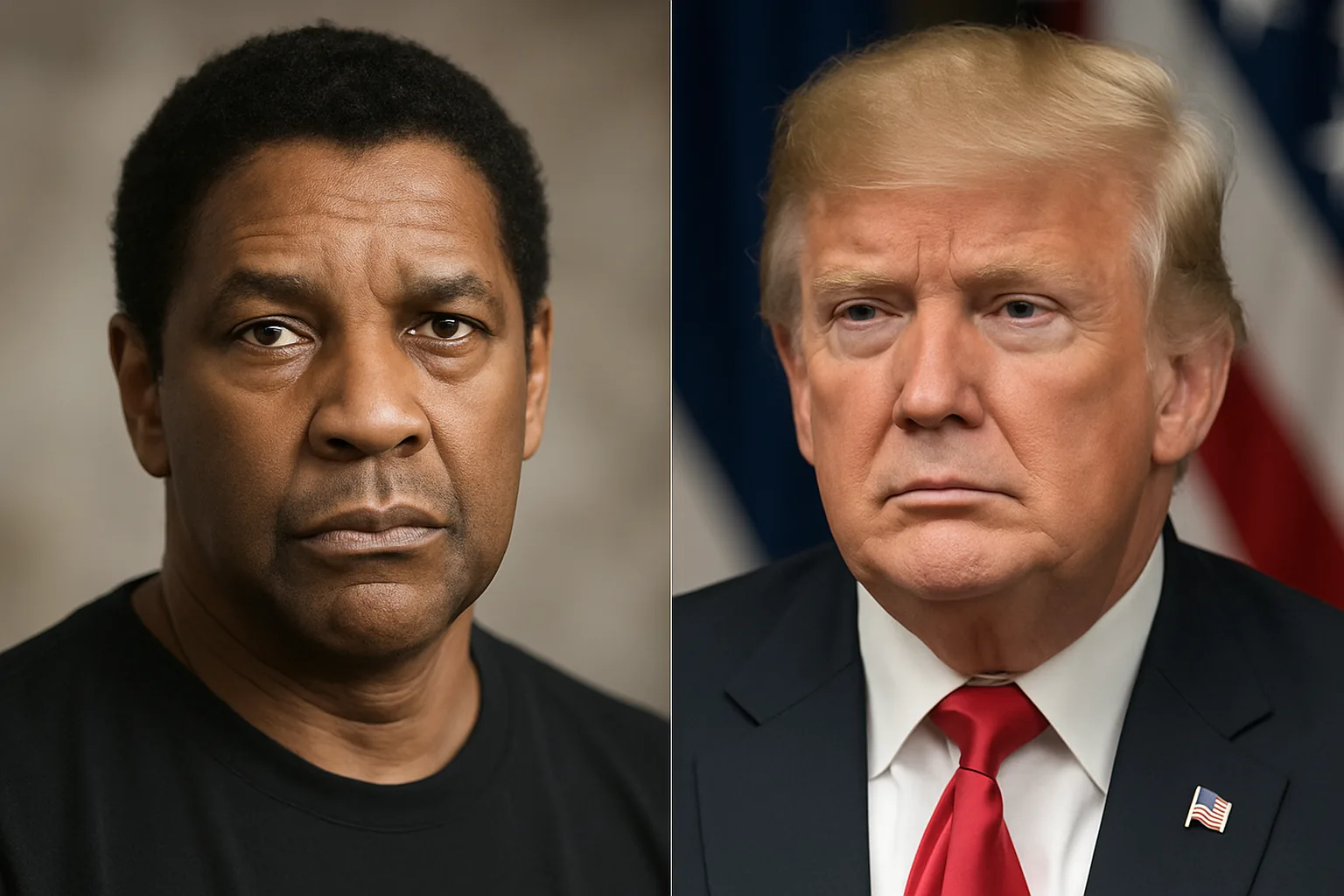
On Monday, October 12, 2026, Donald Trump posted a quote to his Truth Social account that attributed an effusive endorsement of his character and leadership to acclaimed actor Denzel Washington. The post spread rapidly, reaching audiences already primed by years of circulating rumors about Washington’s alleged political sympathies. But the quote is not real — and the story of how a single fabricated sentence migrated across platforms, changed celebrity names, and eventually landed in a presidential social media post illustrates how the Denzel Washington fake quote about Trump fits into a broader and well-documented pattern of manufactured celebrity endorsements.
What Trump Posted and What It Claimed
The quote Trump shared on Truth Social on October 12, 2026 read: “I’ve worked with a lot of people in my life, and I’ve never met anyone braver, smarter, or who cares more about America than Donald Trump.” The statement was presented as a direct, authentic remark from Washington — one of the most respected figures in American cinema, a two-time Academy Award winner with a decades-long career and a carefully maintained public image.
The framing of the post implied that Washington had made this statement in some public or semi-public context, lending it the weight of a genuine celebrity testimonial. No date, venue, or occasion was provided for when Washington supposedly said these words. No interview, press appearance, or event was cited. The quote existed in a vacuum — which, as fact-checkers and Washington’s own representative quickly confirmed, is because it was invented.
According to a report by The Washington Post on October 12, 2026, Alan Nierob, president of PMK Entertainment and Washington’s representative, addressed the quote directly. Nierob stated that the quote is “Not real” and that he had “No idea where it came from.” That unambiguous denial from Washington’s own publicist is the clearest available evidence that the actor never made the statement attributed to him.
The Denzel Washington Fake Quote About Trump: A Documented History of Recycled Attribution
What makes this particular instance of misinformation especially notable is that the quote did not originate with Washington’s name attached. According to CNN‘s fact-check published on October 12, 2026, the same fabricated quote has previously been wrongly attributed to Matthew McConaughey and to Mick Jagger. This is a well-recognized technique in the spread of political misinformation: a flattering or provocative statement is manufactured, attached to a recognizable name, and when debunked, the name is simply swapped for another celebrity with a different but equally potent cultural appeal.
The recycling of a single fabricated quote across multiple celebrity identities is significant for several reasons. First, it strongly suggests that no authentic original source exists — the quote was not paraphrased, taken out of context, or misremembered. It was invented. Second, it demonstrates that the quote’s power lies not in who said it but in the idea that a famous, respected, and culturally prominent person said it. Denzel Washington, Matthew McConaughey, and Mick Jagger represent different demographics, different industries, and different cultural associations. Attaching the same words to each of them suggests a deliberate strategy of casting a wide net for credibility.
👉 Read also: Viral Quotes Attributed to Trump, Denzel Washington, and Buzz Aldrin Are Unverified or Fabricated
Third, the pattern reveals something about how audiences engage with such claims. A quote attributed to a beloved actor or a legendary rock musician carries implicit social proof. Readers who admire the named celebrity are more likely to share the post without verification, extending the quote’s reach before any correction can catch up.
Why False Claims About Washington’s Political Views Keep Circulating
The fabricated quote did not appear in a vacuum. As CNN reported on October 12, 2026, fictitious claims about Washington publicly declaring himself a Trump supporter have circulated online for some time. This context matters: the fake quote posted by Trump on October 12 is not an isolated incident but the latest iteration of a persistent misinformation campaign that has repeatedly attempted to link Washington’s name and reputation to explicit political endorsements he has not made.
Washington is a figure whose public statements on politics have historically been measured and infrequent, which creates a kind of informational vacuum that fabricators exploit. When a prominent person does not make loud, frequent political declarations, there is space for invented ones to fill. The absence of a clear, well-publicized political position becomes an opportunity for misinformation to insert one.
This dynamic is not unique to Washington. Celebrities who maintain a degree of political ambiguity — or who are simply private about their views — are disproportionately targeted by fabricated endorsements, because there is less on the public record to immediately contradict the false claim. A celebrity who has made their political views explicitly clear in numerous interviews and public statements provides fact-checkers with an immediate rebuttal. A celebrity who has not is more vulnerable to having words put in their mouth.
How Fact-Checkers Verified the Quote Was Fabricated
The verification process for a claim like this is methodical and relies on primary sources. When the quote began circulating alongside Trump’s Truth Social post on October 12, 2026, fact-checkers at CNN, AFP, The Washington Post, and Snopes each independently investigated its authenticity.
The standard approach involves several steps. Researchers search for any record of the attributed person making the statement — in interviews, on social media, in press appearances, in recorded speeches. They look for the quote in news archives and in databases of public statements. When no such record exists, they contact the attributed person’s representatives directly for confirmation or denial.
👉 Read also: Viral Photo Claims About World Leaders: Three Fact-Checked Images
In this case, the denial came from Washington’s own publicist, Alan Nierob of PMK Entertainment, who told The Washington Post on October 12, 2026 that the quote is not real and that he had no knowledge of its origin. That statement, from the person professionally responsible for managing Washington’s public communications, is a primary source denial — the most direct form of evidence available when the claim involves a private statement that was allegedly made.
The additional documentation of the quote’s previous attribution to Matthew McConaughey and Mick Jagger — confirmed by CNN‘s reporting — further corroborates the fabricated nature of the quote. A genuine statement made by a real person does not migrate between different attributed speakers. Authentic quotes have a traceable origin: a date, a venue, a recording, a transcript. This quote has none of those.
The Broader Problem of Fabricated Celebrity Political Endorsements
The episode fits into a category of misinformation that has become increasingly common in political communication: the fabricated celebrity endorsement. Unlike other forms of political misinformation — doctored images, misleading statistics, taken-out-of-context video — fabricated quotes require no technical skill to produce. They can be created with a text editor and spread through a screenshot. Their simplicity makes them both easy to manufacture and difficult to contain.
The credibility problem is compounded when a fabricated quote is amplified by a high-profile account. When a post reaches an audience of millions through a prominent platform, the correction — even when it arrives quickly, as it did in this case — reaches a smaller and less engaged audience than the original false claim. Research on misinformation correction consistently finds that initial false claims generate more engagement than subsequent corrections, a dynamic sometimes described as the illusory truth effect: repeated exposure to a claim, even a false one, increases the likelihood that audiences will later remember it as true.
In this specific case, the AFP fact-check published on October 12, 2026 provides a clear, sourced record of the quote’s fabricated status, its exact wording, and its prior attribution to other celebrities. That record is now part of the permanent, searchable documentation of the claim — a resource for anyone who encounters the quote in the future, under whatever name it may next be attached to.
The verdict on the quote attributed to Denzel Washington is unambiguous: it is fabricated. Washington’s representative confirmed it is not real, no primary source record of the statement exists, and the identical quote has previously circulated under the names of other celebrities. What circulated on October 12, 2026 was not a celebrity endorsement — it was a manufactured one, and the documented evidence makes that conclusion clear.
This article was produced with AI assistance and reviewed editorially.

Political Ads in 2026 Midterms Contain False or Misleading Claims About Opponents

Trump Administration ‘Super Intelligence’ Accord Misspells ‘United States’ as ‘Unites States’

Trump Administration ‘Super Intelligence’ Accord Misspells ‘United States’ as ‘Unites States’

No Going Back PAC Ad Makes Misleading Claim About Roy Cooper and Rape Kits
